We have moved to
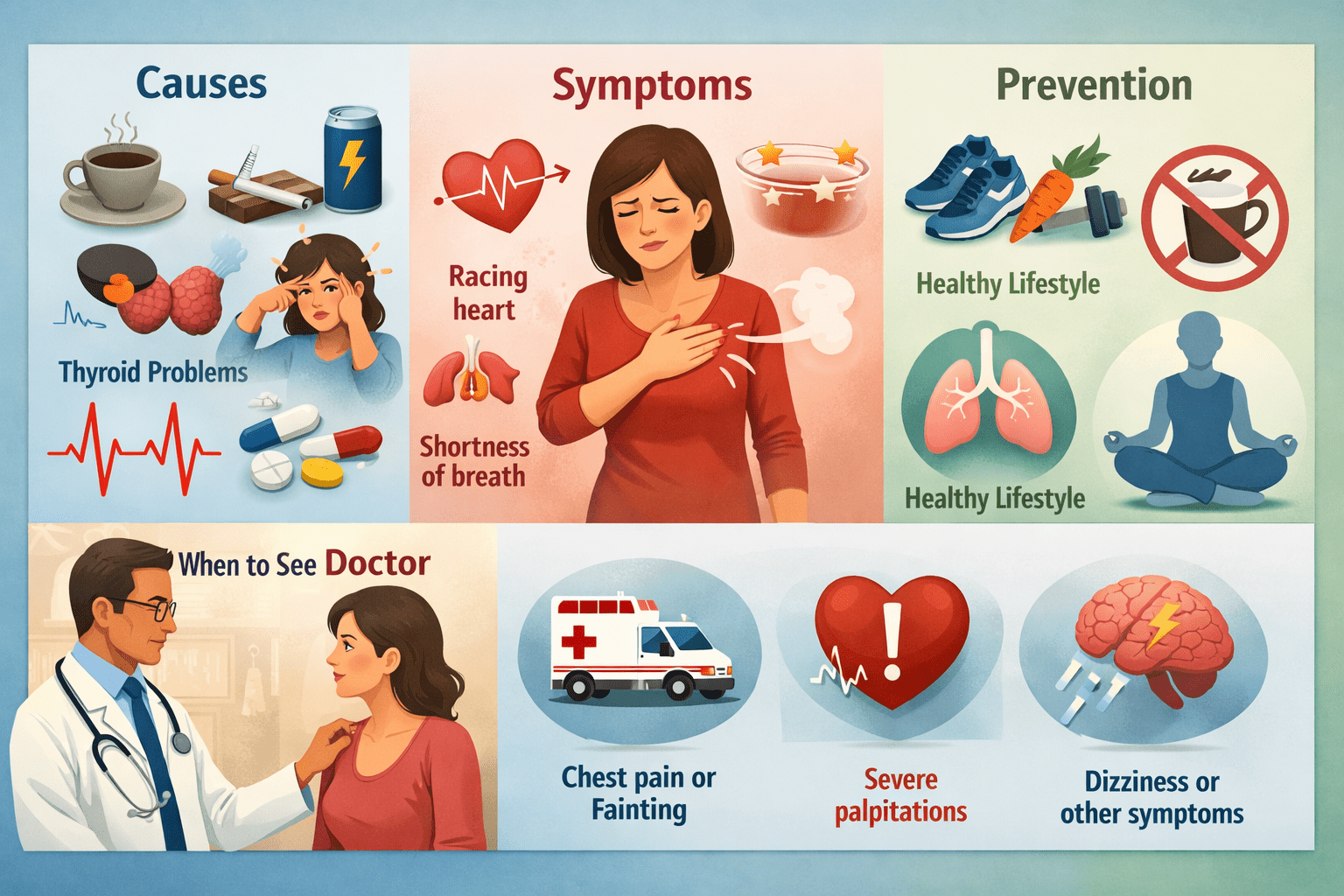

Heart palpitations can feel frightening—even if they last only a few seconds. For many, it feels like the heart is racing, pounding, fluttering, or skipping a beat. While heart palpitations treatments are often harmless, they can sometimes signal a deeper heart-related issue that requires medical attention. The challenge is knowing when heart palpitations are normal and when they indicate a need for urgent care.
In this comprehensive guide, we’ll break down everything you need to know about heart palpitations treatment, the most common causes, how heart palpitations affect blood pressure, and what steps you should take to protect your long-term heart health.
This article is medically aligned with general cardiology guidelines and written for individuals experiencing palpitations or seeking expert-backed information. For diagnosis, personalized care, and proper examination, always consult a qualified healthcare professional like Dr. Cynthia.
What Are Heart Palpitations?
Heart palpitations are sensations that make you unusually aware of your heartbeat. You might feel:
- A sudden thump in the chest
- Rapid heartbeat
- Fluttering or flopping
- Skipped beats
- Heart racing even at rest
These sensations may occur at any time—while sitting, lying down, or during physical activity. Although occasional palpitations can be benign, recurrent or intense episodes require evaluation.
Common Causes of Heart Palpitations
Understanding why palpitations occur is crucial for finding the right heart palpitations treatment. Causes generally fall into three categories: lifestyle-related, emotional, and medical.
1. Stress and Anxiety
Stressful situations trigger the release of adrenaline and cortisol, which stimulate the heart. Anxiety disorders, panic attacks, and chronic stress are some of the most frequent causes of palpitations.
2. Stimulants and Lifestyle Factors
Certain substances and habits may provoke palpitations, including:
- Excess caffeine (coffee, energy drinks)
- Alcohol consumption
- Tobacco use
- Recreational drugs
- High-sugar foods
- Certain workout supplements
These stimulants increase heart rate and trigger irregular beats in sensitive individuals.
3. Hormonal Changes
Palpitations are common during:
- Pregnancy
- Menopause
- Thyroid imbalance (hyperthyroidism)
Hormone fluctuations influence the heart’s rhythm and blood pressure.
4. Medical Conditions
Palpitations can be symptoms of underlying diseases such as:
- Arrhythmias (irregular heart rhythms)
- Anemia
- Low blood sugar
- Low potassium or magnesium
- Fever or infections
- Heart disease
- Dehydration
If underlying medical conditions exist, identifying the cause is essential for proper treatment.
5. Medications
Certain medications may provoke palpitations:
- Asthma inhalers
- Decongestants
- Diet pills
- Thyroid medication
Always consult a healthcare provider before adjusting medication.
How Heart Palpitations and Blood Pressure Are Connected
Many people experiencing palpitations also wonder how they relate to blood pressure. The connection depends on the root cause.
When Palpitations Increase Blood Pressure
Heart palpitations may temporarily raise blood pressure due to:
- Anxiety surges
- Adrenaline response
- Pain or discomfort
- Arrhythmias
An elevated heart rate can increase the force of blood pushing against artery walls, leading to temporary high blood pressure.
When Palpitations Occur With Low Blood Pressure
Sometimes, palpitations and low blood pressure appear together, which may indicate:
- Dehydration
- Electrolyte imbalance
- Certain arrhythmias
- Vasovagal episodes
- More serious heart conditions
If you experience dizziness, fainting, or blurred vision with palpitations, seek medical help urgently.
When to Worry About Heart Palpitations and Blood Pressure
Contact a doctor immediately if palpitations occur with:
- Extremely high blood pressure
- Chest pain
- Shortness of breath
- Vertigo
- Sudden sweating
- Loss of consciousness
These symptoms may indicate a cardiac emergency.
Heart Palpitations Treatment: Best Medical & At-Home Approaches
The right heart palpitations treatment depends on what’s causing them. A doctor will evaluate your symptoms, lifestyle, heart rhythm, medical history, and blood pressure levels before recommending treatment.
1. Medical Evaluation
A cardiologist may suggest:
- ECG
- Holter monitoring
- Blood tests
- Stress test
- Echocardiogram
- Thyroid function test
These tests help identify arrhythmias or other underlying conditions.
Medical Treatments for Heart Palpitations
If palpitations are related to a heart condition or abnormal rhythm, treatment may include:
1. Medication
Doctors may prescribe:
- Beta-blockers
- Calcium channel blockers
- Anti-arrhythmic drugs
- Thyroid medication (if thyroid-related)
These help regulate heart rhythm and stabilize blood pressure.
2. Electrolyte Management
Restoring potassium, sodium, and magnesium levels significantly reduces palpitations in many cases.
3. Treating Underlying Medical Conditions
If palpitations occur due to:
- Anemia → iron supplements
- Thyroid disease → hormone therapy
- Anxiety → therapy or medication
- High blood pressure → antihypertensive medications
Treating root causes is the most effective long-term solution.
4. Lifestyle Modification Plans
A cardiologist may provide guidance on:
- Caffeine reduction
- Stress management
- Sleep improvement
- Weight control
- Exercise routine
Home Remedies for Heart Palpitations
While medical evaluation is essential, certain habits can naturally reduce palpitations, such as:
1. Deep Breathing and Relaxation Techniques
Breathing exercises help activate the parasympathetic nervous system, slowing the heart.
2. Hydration
Dehydration is a major trigger. Ensure sufficient water intake, especially in hot weather or during workouts.
3. Limiting Stimulants
Reduce:
- Coffee
- Tea
- Energy drinks
- Chocolates
4. Balanced Diet
Foods rich in magnesium and potassium help stabilize the heart rhythm.
5. Improving Sleep Quality
Poor sleep increases stress hormones, causing palpitations.
Are Heart Palpitations Dangerous?
Most heart palpitations are harmless, but persistent or intense episodes may signal problems like:
- Atrial fibrillation
- Atrial flutter
- Ventricular tachycardia
- Structural heart conditions
- Hyperthyroidism
If palpitations occur with chest pain or high blood pressure, it may indicate a serious condition requiring immediate attention.
When to See a Doctor
Seek medical care urgently if palpitations occur with:
- Fainting
- Severe dizziness
- Chest pressure or pain
- Difficulty breathing
- Rapid heart rate lasting more than a few minutes
- Palpitations after taking new medication
- Palpitations with high blood pressure
When in doubt, always consult a cardiologist.
Preventing Heart Palpitations
Follow these preventive measures to lower the risk:
- Reduce caffeine and sugar intake
- Manage stress through meditation or yoga
- Maintain healthy body weight
- Stay active with daily exercise
- Monitor your blood pressure
- Avoid smoking and alcohol
- Eat heart-healthy foods
- Ensure regular health check-ups
These steps significantly improve overall heart function.
Heart Palpitations Treatment at Dr. Cynthia’s Clinic
Dr. Cynthia specializes in diagnosing and treating cardiac conditions, including heart palpitations, arrhythmias, and blood pressure abnormalities. At her clinic, patients receive:
Comprehensive evaluation & heart monitoring
Using advanced diagnostic tools to detect underlying causes.
Personalized treatment plans
Based on your symptoms, blood pressure, lifestyle, and medical history.
Medication management
Correcting heart rhythm, reducing stress on the heart, and improving blood flow.
Guidance for long-term heart health
Helping you adopt habits that strengthen heart function and prevent future episodes.
Compassionate, evidence-based care
Focused on patient comfort, early diagnosis, and preventive health.
Final Thoughts
Heart palpitations can be alarming, but with the right approach, they are manageable and treatable. Understanding the symptoms, recognizing triggers, and seeking timely medical advice ensures better heart health. If you experience frequent palpitations, unexplained anxiety, or symptoms related to high or low blood pressure, don’t ignore them.
Proper heart palpitations treatment begins with expert diagnosis—and your heart deserves the best care.
Call to Action
Get clarity and expert guidance. Schedule a personalized consultation with Dr. Cynthia Thaik today. Early evaluation can help prevent serious heart issues and give you peace of mind.
Book your appointment now—your heart deserves expert care.