We have moved to
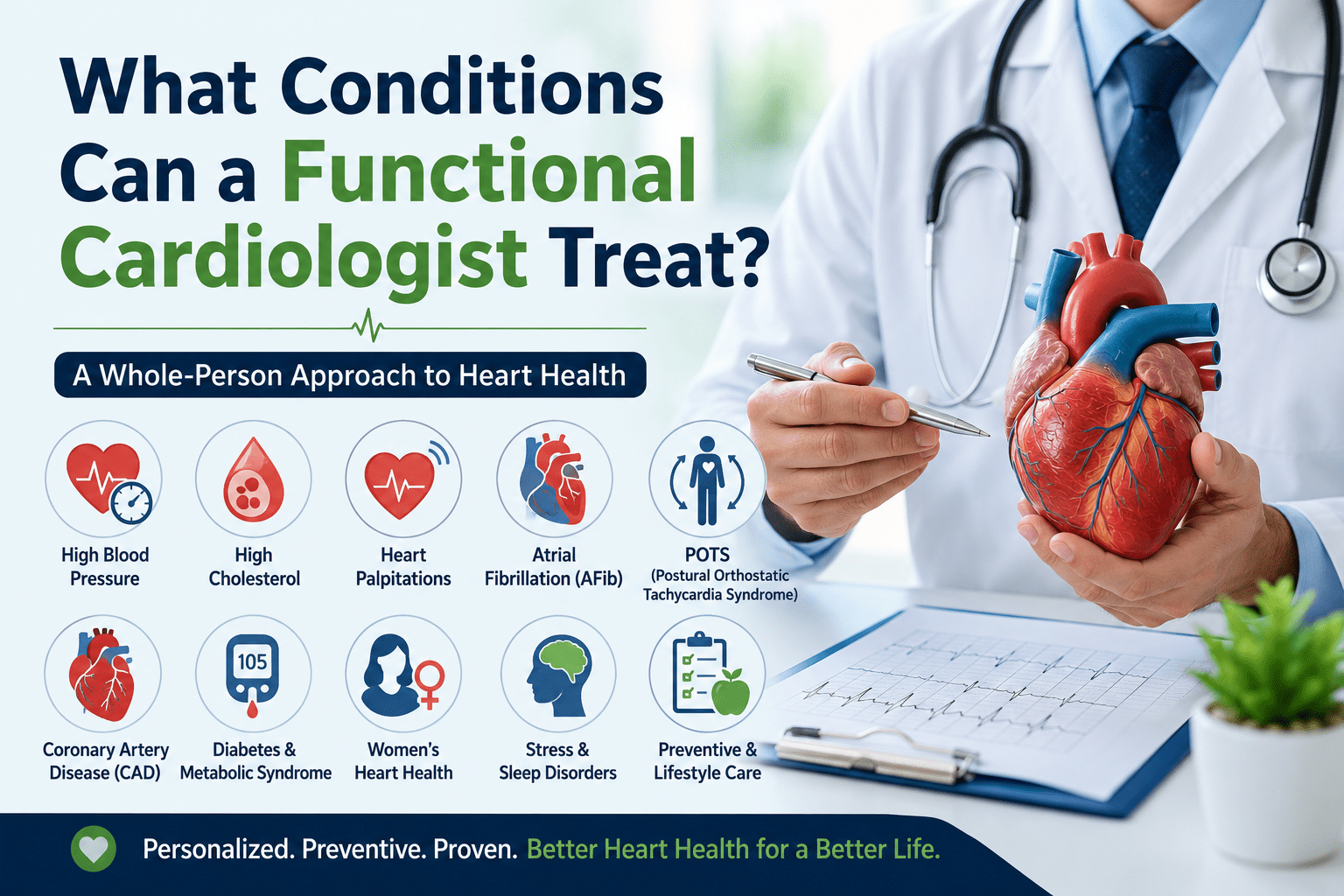

When it comes to heart health, treating symptoms is only part of the picture. A functional cardiologist looks at the broader factors that may contribute to cardiovascular problems, including nutrition, lifestyle, metabolic health, sleep, stress, inflammation, and other individual risk factors.
Functional cardiology combines conventional cardiovascular medicine with a more personalized approach to identifying and addressing factors that may influence heart health. Depending on the patient’s needs, this approach may be useful alongside standard cardiology care.
What Is a Functional Cardiologist?
A functional cardiologist is a cardiovascular physician who uses traditional cardiology knowledge while taking a broader view of the factors that can affect the heart and circulatory system.
Rather than focusing only on a diagnosis or isolated symptom, a functional cardiology evaluation may consider:
- Blood pressure and cholesterol
- Blood sugar and metabolic health
- Nutrition and dietary patterns
- Physical activity
- Sleep quality
- Stress and emotional well-being
- Inflammation and lifestyle factors
- Family and cardiovascular history
- Hormonal and age-related changes
- Medication and supplement use
The goal is to develop an individualized plan based on a person’s cardiovascular risks, symptoms, medical history, and overall health.
What Conditions Can a Functional Cardiologist Treat?
A functional cardiologist may evaluate and manage many of the same cardiovascular conditions treated by a conventional cardiologist. The difference is often in the depth of risk-factor assessment and the emphasis on personalized prevention and lifestyle strategies.
1. High Blood Pressure
High blood pressure, or hypertension, is one of the most important cardiovascular risk factors. If left unmanaged, it can increase the risk of heart attack, stroke, kidney disease, and other complications.
A functional cardiology approach may look beyond blood pressure readings to factors such as:
- Diet and sodium intake
- Physical activity
- Sleep quality
- Stress
- Weight and metabolic health
- Alcohol consumption
- Medication effectiveness and adherence
Lifestyle strategies may be incorporated alongside medications when appropriate.
2. High Cholesterol
Elevated LDL cholesterol and other lipid abnormalities can contribute to plaque buildup in the arteries.
A functional cardiologist may evaluate cholesterol levels in the context of the patient’s overall cardiovascular risk. Depending on the situation, assessment may include family history, blood pressure, glucose metabolism, lifestyle factors, and other relevant testing.
Treatment can include nutrition and lifestyle changes, medications when indicated, and ongoing monitoring.
3. Heart Palpitations
Heart palpitations can feel like pounding, racing, fluttering, or skipped beats. They can have many possible causes, ranging from benign triggers to heart rhythm disorders.
A functional cardiologist may investigate potential contributors while also determining whether a cardiac condition is present. Evaluation may include an ECG, ambulatory heart monitoring, laboratory testing, or other diagnostic assessments when appropriate.
4. Atrial Fibrillation
Atrial fibrillation (AFib) is an irregular heart rhythm that can increase the risk of blood clots and stroke.
People with AFib may experience palpitations, fatigue, shortness of breath, dizziness, or reduced exercise tolerance. Some people have no noticeable symptoms.
A comprehensive approach to AFib may address standard rhythm and stroke-risk management while also considering factors such as:
- High blood pressure
- Sleep apnea
- Weight
- Alcohol intake
- Physical activity
- Metabolic health
- Sleep quality
These factors do not replace evidence-based AFib treatment, but addressing modifiable risks can be an important part of long-term care.
5. Postural Orthostatic Tachycardia Syndrome (POTS)
POTS is a condition involving an abnormal increase in heart rate after standing and can be associated with symptoms such as lightheadedness, fatigue, palpitations, and exercise intolerance.
A cardiologist familiar with autonomic conditions can evaluate symptoms, rule out other cardiovascular causes, and develop an individualized management plan.
Depending on the person, management may involve hydration, appropriate fluid and electrolyte strategies, physical conditioning, compression, medication, and other interventions.
6. Coronary Artery Disease and Cardiovascular Risk
Coronary artery disease occurs when plaque builds up in the arteries that supply the heart.
Functional cardiology may have a strong emphasis on prevention and risk reduction. Patients may receive a more comprehensive assessment of factors that influence cardiovascular risk, including cholesterol, blood pressure, blood sugar, lifestyle, family history, and other relevant markers.
For people who already have coronary artery disease, functional strategies should complement—not replace—appropriate medical and cardiology treatment.
7. Metabolic and Cardiovascular Risk
Conditions such as insulin resistance, prediabetes, diabetes, obesity, and metabolic syndrome can increase cardiovascular risk.
Because metabolic health and heart health are closely connected, a functional cardiologist may consider these factors when creating a cardiovascular prevention plan.
Improving nutrition, physical activity, sleep, and other lifestyle factors may help support healthier metabolic and cardiovascular outcomes.
8. Women’s Cardiovascular Health
Women can experience cardiovascular risk differently at different stages of life. Factors such as pregnancy-related cardiovascular changes, menopause, blood pressure, cholesterol, sleep, and metabolic health may all deserve consideration.
A personalized cardiovascular evaluation can help identify risk factors and create an appropriate prevention or treatment strategy.
9. Cardiovascular Effects of Stress and Poor Sleep
Chronic stress and inadequate sleep can affect blood pressure, heart rate, metabolic health, and overall cardiovascular well-being.
A functional cardiology assessment may consider sleep habits, stress levels, physical activity, and other lifestyle factors as part of a broader cardiovascular health plan.
Sleep apnea is particularly important because untreated obstructive sleep apnea is associated with cardiovascular conditions, including hypertension and atrial fibrillation.
How Does Functional Cardiology Differ From Traditional Cardiology?
Traditional cardiology focuses on diagnosing and treating cardiovascular diseases using established medical and procedural treatments.
Functional cardiology incorporates that cardiovascular foundation while placing additional emphasis on identifying modifiable contributors to disease and supporting long-term prevention.
For example, a patient with high blood pressure may need medication, but their overall plan may also address sleep, nutrition, stress, exercise, metabolic health, and other relevant factors.
The two approaches do not have to be viewed as opposites. Functional strategies can often complement conventional cardiovascular care.
What Happens During a Functional Cardiology Consultation?
A functional cardiology consultation typically begins with a detailed review of your medical history, symptoms, medications, lifestyle, family history, and cardiovascular risk factors.
Depending on your individual situation, your cardiologist may recommend:
- Blood pressure monitoring
- Cholesterol and metabolic testing
- Electrocardiography (ECG)
- Heart rhythm monitoring
- Echocardiography
- Vascular or cardiovascular risk assessments
- Sleep evaluation
- Nutrition and lifestyle assessment
- Additional testing when clinically appropriate
The purpose is not to order every possible test. Instead, testing should be guided by your symptoms, medical history, risk factors, and clinical needs.
Who May Benefit From Functional Cardiology?
Functional cardiology may be particularly appealing to people who want a more personalized approach to cardiovascular prevention or who have ongoing symptoms that require a comprehensive evaluation.
You may consider discussing functional cardiology with your healthcare provider if you have:
- High blood pressure
- High cholesterol
- Heart palpitations
- Atrial fibrillation
- POTS symptoms
- Metabolic risk factors
- A family history of cardiovascular disease
- Multiple cardiovascular risk factors
- Concerns about long-term heart disease prevention
It is important to seek appropriate medical evaluation for new, severe, or unexplained symptoms rather than assuming they are caused by lifestyle or functional factors.
Frequently Asked Questions
What does a functional cardiologist do?
A functional cardiologist evaluates and manages cardiovascular conditions while also considering lifestyle, nutrition, metabolic health, sleep, stress, and other factors that may influence cardiovascular risk.
Can a functional cardiologist treat high blood pressure?
Yes. High blood pressure can be evaluated and treated using standard medical care, with lifestyle and risk-factor management incorporated when appropriate.
Can a functional cardiologist help with POTS?
A cardiologist experienced in autonomic disorders may evaluate and manage POTS. Treatment is individualized and may include lifestyle strategies, physical conditioning, medications, and other approaches.
Can functional cardiology replace traditional cardiology?
No. Functional cardiology should not be considered a replacement for necessary evidence-based cardiovascular treatment. Depending on the condition, medications, procedures, or specialist care may be essential.
When should I see a functional cardiologist?
Consider speaking with a cardiologist if you have persistent palpitations, high blood pressure, abnormal cholesterol, AFib, POTS symptoms, cardiovascular risk factors, or concerns about preventing heart disease.