We have moved to

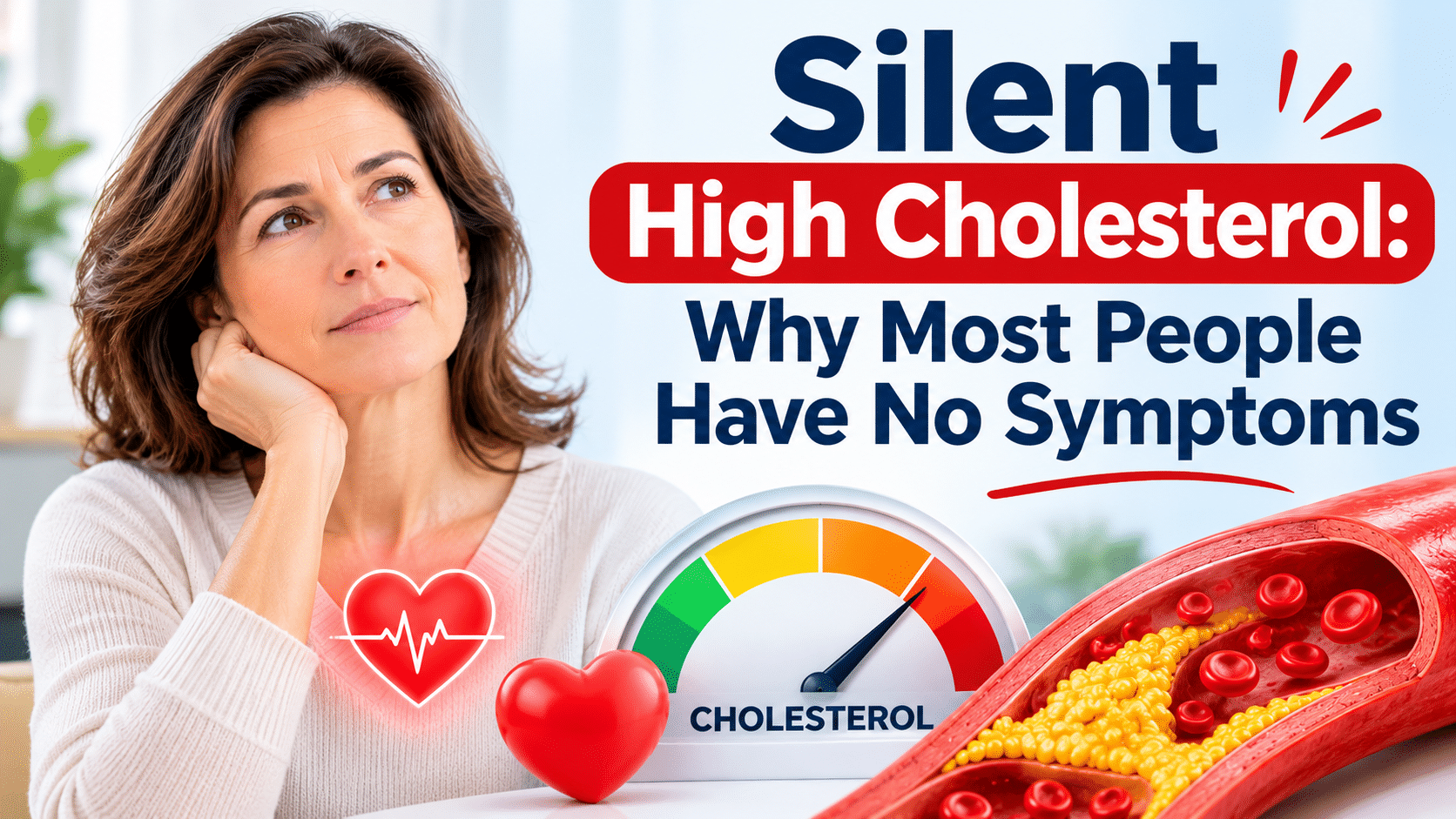

Your annual lab results show up in the patient portal, and one line is flagged in red: LDL cholesterol. You think back over the week. Slept fine. Walked the dog. Energy was normal. Nothing hurt. So how can something be wrong when you feel perfectly okay?
Because high cholesterol doesn’t feel like anything. It’s one of the quietest problems in medicine, and it can go on for decades while your arteries slowly change. That’s why doctors call it silent, and why so many people only find out after a heart attack or a stroke.
So let’s talk about why it hides, the few clues it sometimes leaves, the symptoms people wrongly blame on it, and what to do once you know your numbers.
What’s Actually Going On in Your Blood
Cholesterol has a bad reputation that it only half deserves. Your body uses it to build cell walls, make hormones like estrogen and testosterone, and produce vitamin D. Your liver makes most of it, so you’re not depending on food alone.
The trouble is too much of it, specifically too much LDL. Think of LDL as a delivery truck carrying cholesterol around your bloodstream. When there are too many trucks for too long, some of them end up lodged in the inner wall of an artery. Your immune system treats that spot like an injury and responds with inflammation. Over the years, the cholesterol, immune cells and scar-like tissue pile up into plaque.
HDL does the opposite job and hauls cholesterol back to the liver. Triglycerides, another kind of blood fat, add to the picture, especially when they’re high and HDL is low. Once the balance has tipped the wrong way for long enough, you have high cholesterol (the medical term is hyperlipidemia). And you still won’t feel a thing.
Why You Can’t Feel High Cholesterol
There are really three reasons.
First, there’s nothing in your bloodstream to feel with. A sprained ankle hurts because nerves report the damage to your brain. Cholesterol drifting through your blood vessels doesn’t set off any alarm.
Second, plaque is slow. It builds over decades, and arteries adapt as it grows. They can actually stretch outward to make room, so blood keeps flowing normally even while the plaque gets bigger. That’s good for your comfort and bad for early warning.
Third, early plaque often isn’t blocking anything yet. Chest pain, breathlessness or leg cramps usually show up only after an artery has narrowed a lot, or when a plaque cracks open and a clot forms on top of it. By then the process has typically been running for years.
For plenty of people, the first symptom of untreated high cholesterol is a heart attack or stroke. That’s why the guidelines lean so heavily on testing instead of waiting for symptoms.
Symptoms People Blame on Cholesterol (But Shouldn’t)
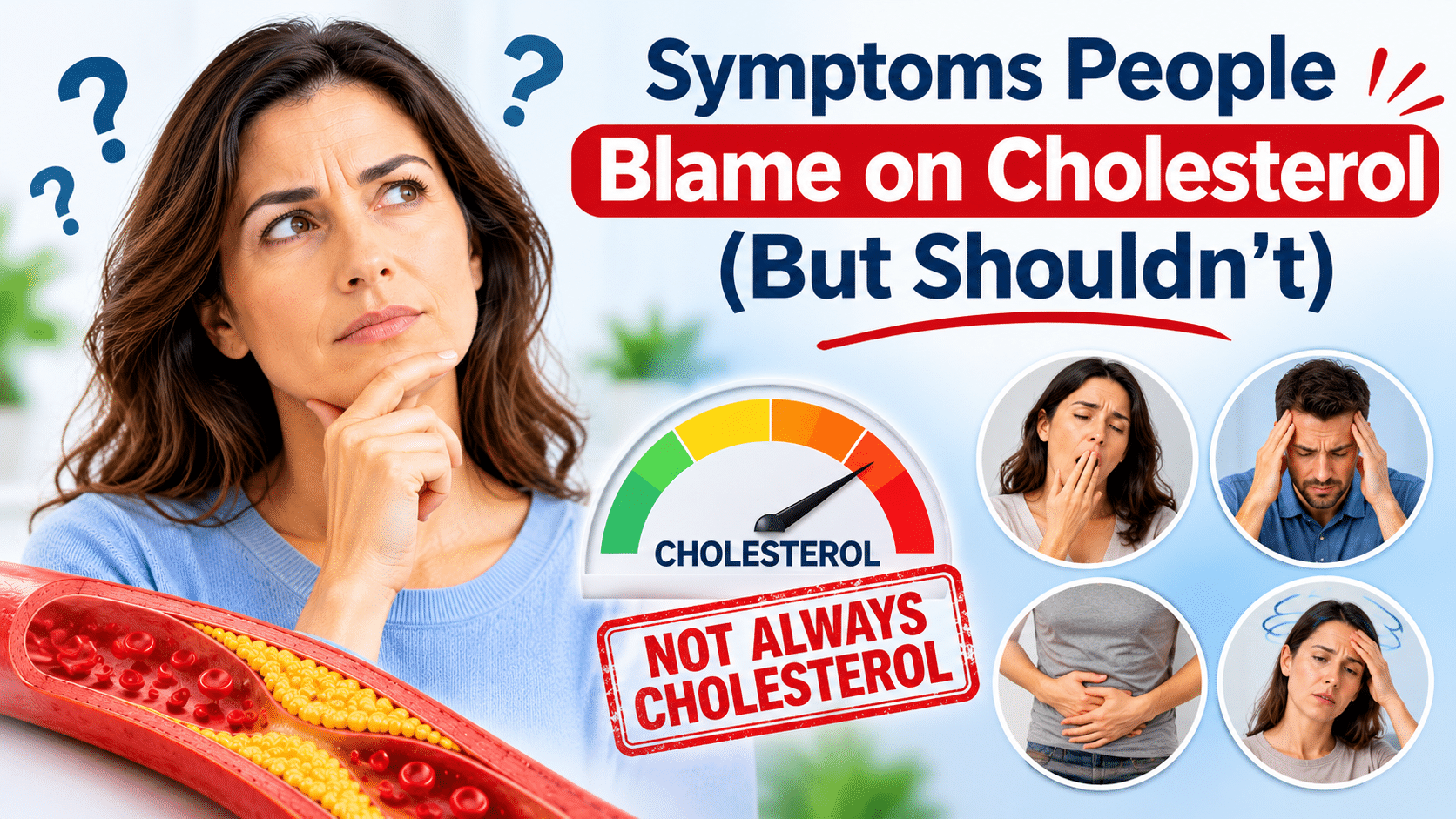
Search “high cholesterol symptoms” and you’ll find long lists: tiredness, dizziness, headaches, brain fog, tingling hands, even bad breath. It’s easy to see why people connect the dots. These are real complaints, and they’re annoying. But cholesterol itself doesn’t cause them.
The usual suspects are things like thyroid problems, anemia, low vitamin D or B12, poor sleep, blood sugar swings, dehydration, stress, and conditions such as POTS. If you feel run down, get that looked at properly instead of guessing.
The reverse is just as true. Feeling great isn’t proof that your numbers are fine. Only a blood test can tell you.
The Few Visible Clues
Most people with high cholesterol have no visible signs at all. When levels are very high, or the cause is inherited, the body occasionally gives something away:
- Xanthelasma: soft, yellowish patches on or around the eyelids. Harmless on their own, but a good reason to get a lipid test.
- Corneal arcus: a gray or white ring around the colored part of the eye. Common and usually unimportant in older adults, but worth testing for if you’re under 45.
- Xanthomas: firm, yellowish lumps in the tendons (often the Achilles) or on the knuckles, elbows and knees. They’re strongly linked to inherited cholesterol disorders.
- Severe upper belly pain: very high triglycerides can inflame the pancreas, which is painful and needs urgent care.
Don’t use this list as a self-check, though. Plenty of people with dangerous cholesterol have none of these.
When It Runs in the Family
Familial hypercholesterolemia (FH) is a genetic condition that causes very high LDL from birth. It’s commonly estimated to affect about 1 in 250 people, and most of them have no idea.
The red flags: an LDL of 190 mg/dL or higher, a close relative who had a heart attack young (before 55 for men, before 65 for women), or those tendon lumps. If that sounds familiar, ask about testing early. Treating FH sooner is one of the clearest wins in preventive cardiology.
When the Silence Ends
Once plaque narrows an artery enough, or a clot blocks it, symptoms arrive. They aren’t symptoms of cholesterol as such. They’re what years of high cholesterol can lead to:
- Pressure, tightness or pain in the chest, especially with effort or stress
- Breathlessness on stairs or hills you used to handle easily
- Cramping or heaviness in the calves when you walk that eases when you stop
- Sudden weakness or numbness, trouble speaking, or vision changes
Women often describe a heart attack differently: unusual exhaustion, nausea, pain in the jaw or between the shoulder blades, lightheadedness, or a pressure that doesn’t feel like “classic” chest pain. If you think you’re having a heart attack or stroke, call emergency services. Don’t wait to see if it passes.
Why Women Get Missed
Heart disease is the leading cause of death for women, and it’s still underestimated. Hormones are part of the story.
Estrogen helps keep LDL lower and HDL higher, so before menopause many women have some built-in protection. As estrogen drops during perimenopause and afterward, LDL and total cholesterol often climb, even when nothing about diet or weight has changed. Pregnancy complications like preeclampsia or gestational diabetes, PCOS and thyroid conditions add to long-term risk.
Now add the fact that women’s heart symptoms can be subtle and are sometimes put down to stress or anxiety, and it’s clear why routine testing matters. If you’re in your 40s or 50s and can’t remember your last lipid panel, book one. For a closer look at the specific signs, see our guide on how to recognize high cholesterol symptoms in women.
Who Should Get Tested, and How Often
A lipid panel is a simple blood draw, and most of the time you don’t need to fast. General guidance from major heart organizations looks like this:
- Healthy adults: start around age 20 and repeat every 4 to 6 years if results are normal.
- Higher risk: diabetes, high blood pressure, obesity, a smoking history, kidney disease, PCOS, or a family history of early heart disease means earlier and more frequent testing.
- Children and teens: at least once between ages 9 and 11, and again in the late teens.
- After menopause or a major health change: worth rechecking.
Your doctor may suggest a different schedule based on your own risk.
Reading Your Numbers
Here’s a rough guide for adults. Your personal targets may be tighter, especially if you have diabetes or existing heart disease.
| Test | Generally Desirable |
|---|---|
| Total cholesterol | Below 200 mg/dL |
| LDL (“bad”) cholesterol | Below 100 mg/dL (lower for higher-risk people) |
| HDL (“good”) cholesterol | 60 mg/dL or higher is protective; below 40 (men) or 50 (women) is considered low |
| Triglycerides | Below 150 mg/dL |
A standard panel doesn’t always tell the full story. Two people with the same LDL can carry very different numbers of cholesterol particles, and some people have an inherited marker called Lp(a) that never shows up on a basic test. ApoB and Lp(a) can fill in those gaps, especially with a family history of heart disease. Most people only need Lp(a) measured once in their lifetime. Ask your doctor whether these tests make sense for you.
What to Do About It
Finding out early is the good news here, because cholesterol responds well to action.
Start with food. Soluble fiber from oats, beans, lentils, apples, and chia or flax seeds helps your body clear LDL. A Mediterranean-style way of eating, with olive oil, nuts, fish and plenty of vegetables, works well for many people. Cut back on trans fats and ultra-processed snacks (our list of the top ten worst foods for high cholesterol is a good place to start), and watch sugar and alcohol if your triglycerides run high.
Move more. About 150 minutes a week of brisk walking, cycling or swimming tends to nudge HDL up, triglycerides down, and blood sugar in a better direction. It doesn’t have to be dramatic. Consistency beats intensity here.
Don’t ignore sleep and stress. Both affect hormones and metabolism, and both can show up in your lab results.
Look for the cause behind the number. In an integrative or functional approach, a high LDL is a clue, not just a figure to push down. Insulin resistance, an underactive thyroid, chronic inflammation, gut health and hormone shifts can all play a role, so it’s worth asking what’s driving yours. Dr. Thaik’s high cholesterol treatment page explains how her practice approaches exactly that.
Stay open to medication. For people with genetically high LDL or existing heart disease, lifestyle changes alone often aren’t enough, and that’s not a failure. Statins have strong evidence for lowering the risk of heart attack and stroke. Build a plan with your doctor, and don’t stop a prescribed medication on your own.
The Bottom Line
If you remember one thing, make it this: feeling fine tells you nothing about your cholesterol. The tiredness, headaches and dizziness are probably something else, and the real warning signs, like chest pressure or calf pain when walking, mean things have already gone further than they should. A simple blood test is the only way to know, and the sooner you take it, the more options you have.
Frequently Asked Questions About Silent High Cholesterol
Can you have high cholesterol and feel completely fine?
Yes, and that’s the most common experience. Even significantly high levels usually cause no symptoms. Many people feel healthy right up until a blood test, or a heart attack or stroke, says otherwise.
What are the first signs of high cholesterol?
For most people there aren’t any. The first sign is an abnormal lipid panel. In rarer cases, like very high levels or an inherited disorder, you might notice yellowish patches near the eyelids or firm lumps along the tendons.
Does high cholesterol cause fatigue or dizziness?
Not directly. Cholesterol itself doesn’t make you tired or lightheaded. If you’re dealing with either, ask your doctor to check thyroid function, iron, blood sugar, blood pressure and sleep, and get your cholesterol tested at the same visit.
Can high cholesterol cause chest pain?
Not on its own. But over time it can feed plaque that narrows the heart’s arteries, which may cause angina, meaning chest pain or pressure that often shows up with exertion. Any new chest pain should be checked promptly.
How can I tell if I have high cholesterol without a test?
You can’t. Nothing about how you look or feel gives a reliable answer. A lipid blood test is the only accurate method, and it’s quick and routine.
How often should I get my cholesterol checked?
Most healthy adults should be screened every 4 to 6 years, starting in their 20s. If you have diabetes, high blood pressure, obesity, a smoking history or a family history of heart disease, your doctor may want to test more often.
Can I lower my cholesterol without medication?
Sometimes. Diet, regular exercise, a healthy weight, better sleep and less stress can lower cholesterol meaningfully for many people. Whether that’s enough depends on your starting numbers, your family history and your overall heart risk. Your doctor can help you decide if and when medication should be added.
Is high cholesterol genetic?
It can be. Lifestyle matters for most people, but genes play a big part too. Familial hypercholesterolemia affects roughly 1 in 250 people and causes very high LDL from an early age. If close relatives had early heart disease or very high cholesterol, tell your doctor and ask about screening.