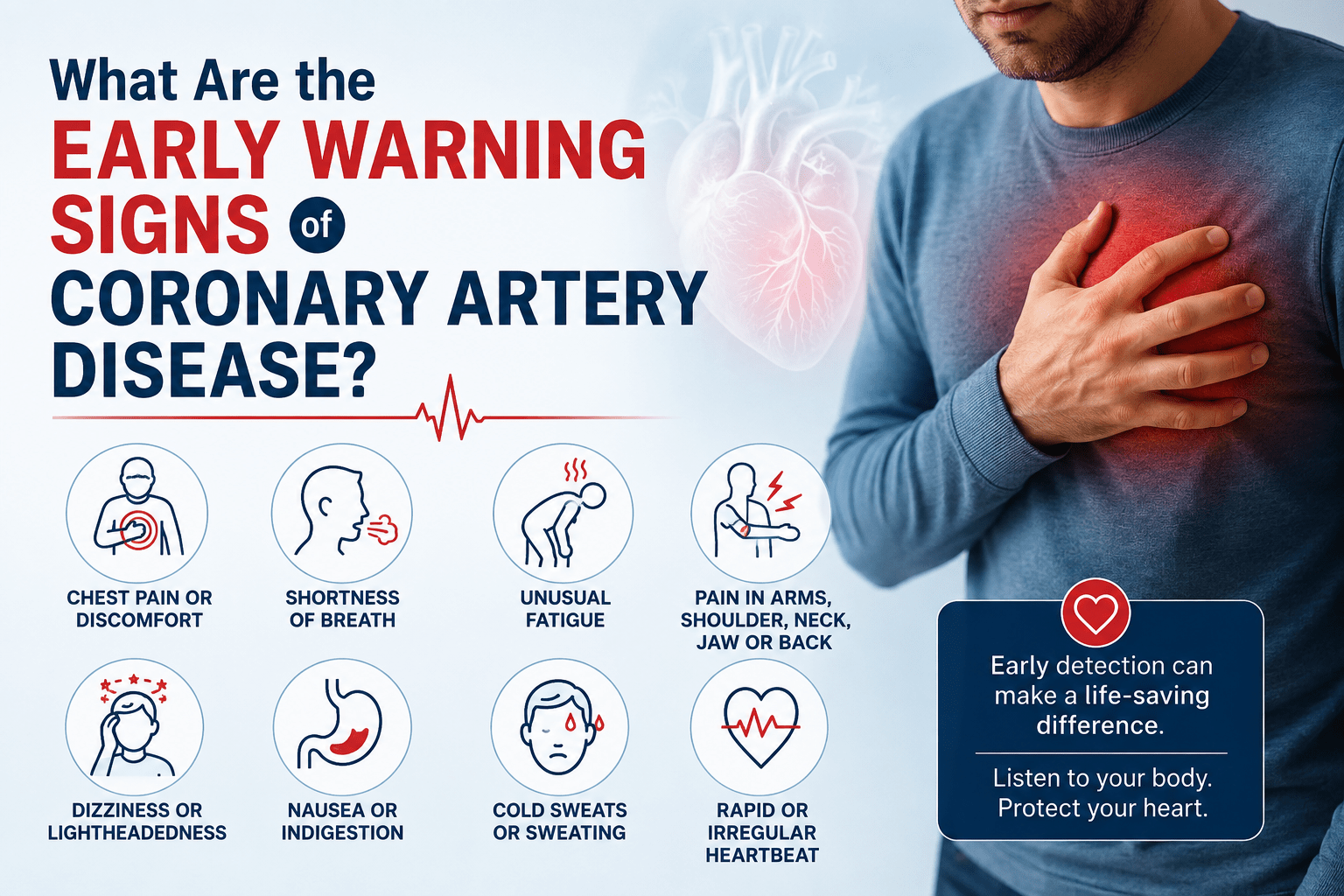

Coronary artery disease (CAD) develops when plaque builds up inside the arteries that supply blood to the heart. Over time, this narrowing can reduce blood flow to the heart muscle and increase the risk of angina, heart attack, and other cardiovascular complications.
One of the challenges with coronary artery disease is that it does not always cause obvious symptoms in its early stages. Some people may have mild or intermittent symptoms, while others may experience no warning signs until the disease has become more advanced.
Recognizing potential early warning signs of coronary artery disease and discussing them with a qualified healthcare professional can help identify cardiovascular risks sooner.
Also Read – What Are the Best Over-the-Counter Medications for Chest Pain Relief?
What Is Coronary Artery Disease?
Coronary artery disease occurs when the coronary arteries become narrowed or blocked, most commonly because of atherosclerosis, a process involving the buildup of cholesterol, fats, and other substances in artery walls.
As the arteries narrow, the heart may not receive enough oxygen-rich blood, particularly during physical activity or periods of stress.
Common risk factors include:
- High LDL cholesterol
- High blood pressure
- Diabetes
- Smoking
- Excess weight or obesity
- Physical inactivity
- Unhealthy dietary patterns
- Family history of heart disease
- Increasing age
- Chronic stress and poor sleep
Having one or more risk factors does not mean you definitely have CAD, but it can make cardiovascular screening and prevention more important.
Also Read – Coping With Flare-Ups: Managing POTS Symptoms on Tough Days
Early Warning Signs of Coronary Artery Disease
1. Chest Pressure or Discomfort
Chest discomfort is one of the most recognized symptoms associated with coronary artery disease.
Some people describe it as:
- Pressure or squeezing
- Tightness
- Heaviness
- Burning
- Fullness
- An uncomfortable sensation in the center or left side of the chest
This discomfort may appear during exercise, climbing stairs, emotional stress, or other activities that increase the heart’s demand for oxygen. It may improve after resting.
Not every episode of chest discomfort is caused by CAD, but recurring or unexplained chest symptoms deserve medical evaluation.
2. Shortness of Breath
Shortness of breath can sometimes be an early sign that the heart is not receiving enough oxygen-rich blood.
You may notice breathlessness while walking, exercising, climbing stairs, or performing activities that previously felt easy.
Shortness of breath has many possible causes, so it should not automatically be attributed to coronary artery disease. However, when it occurs together with chest discomfort, unusual fatigue, sweating, nausea, or dizziness, prompt medical assessment is important.
3. Unusual or Persistent Fatigue
Feeling tired after a busy day is normal. Persistent or unusual fatigue is different.
Some people with cardiovascular disease may notice that everyday activities require more effort than they used to. You might feel unusually exhausted after walking, doing household tasks, or exercising.
Fatigue is a nonspecific symptom and can have many causes, including anemia, thyroid disorders, sleep problems, infections, medications, and other medical conditions. Still, unexplained fatigue should be discussed with a healthcare professional, especially when accompanied by other heart-related symptoms.
4. Pain or Discomfort in Other Areas
Heart-related discomfort does not always remain in the chest.
Discomfort may radiate to the:
- Arm or arms
- Shoulder
- Back
- Neck
- Jaw
- Upper abdomen
The sensation may come and go and may occur during physical activity or stress.
Because these symptoms can overlap with other conditions, it is important not to diagnose the cause based on location alone.
5. Dizziness or Lightheadedness
Dizziness or feeling lightheaded can have numerous causes. However, when it occurs with chest discomfort, shortness of breath, weakness, or an irregular heartbeat, it should not be ignored.
Reduced blood flow, abnormal heart rhythms, blood pressure changes, and other cardiovascular problems can contribute to dizziness.
6. Nausea or Indigestion-Like Symptoms
Some people, particularly women, may experience symptoms that do not initially seem related to the heart.
These can include:
- Nausea
- Indigestion-like discomfort
- Upper abdominal discomfort
- Unusual sweating
- Weakness
Because heart symptoms can sometimes be subtle or atypical, persistent or unexplained symptoms should be evaluated rather than assumed to be a digestive problem.
7. Cold Sweats or Unexplained Sweating
Sudden sweating without an obvious explanation especially when accompanied by chest pressure, nausea, shortness of breath, or weakness can be a warning sign of a serious cardiovascular problem.
This is particularly important when symptoms appear suddenly or during physical activity.
Can Coronary Artery Disease Have No Symptoms?
Yes. Coronary artery disease can sometimes be present without obvious symptoms.
Some individuals do not experience noticeable chest pain even when coronary arteries have significant disease. This can make prevention and assessment of cardiovascular risk especially important.
People with diabetes, high blood pressure, high cholesterol, smoking history, or a strong family history of heart disease may need to pay particular attention to their overall cardiovascular risk.
Early Signs Can Be Different in Women
Heart disease does not always present identically in men and women.
While chest discomfort can occur in both, women may also experience symptoms such as:
- Unusual fatigue
- Shortness of breath
- Nausea
- Back or jaw discomfort
- Dizziness
- Sweating
- Sleep disturbances
These symptoms are not specific to coronary artery disease, but they can warrant evaluation when they are new, persistent, unexplained, or occur with other cardiovascular symptoms.
When Should You Seek Emergency Care?
Do not wait for a routine appointment if you experience new, severe, persistent, or unexplained chest pressure or discomfort, particularly if it occurs with shortness of breath, cold sweating, nausea, fainting, or pain spreading to the arm, back, neck, or jaw.
These symptoms can indicate a heart attack or another medical emergency and require immediate medical attention.
How Is Coronary Artery Disease Diagnosed?
If your healthcare provider suspects coronary artery disease, they may consider your symptoms, medical history, family history, and cardiovascular risk factors.
Depending on your situation, evaluation may include:
- Blood pressure measurement
- Cholesterol and blood glucose testing
- Electrocardiogram (ECG/EKG)
- Exercise or stress testing
- Echocardiography
- Coronary CT angiography
- Other cardiovascular imaging or testing when appropriate
Not everyone needs every test. The appropriate evaluation depends on your symptoms and individual risk profile.
How Can You Reduce Your Risk of Coronary Artery Disease?
Although some risk factors cannot be changed, many can be addressed through prevention and ongoing cardiovascular care.
Helpful strategies may include:
Manage Cholesterol
High LDL cholesterol can contribute to plaque buildup in the arteries. Work with your healthcare professional to understand your cholesterol levels and determine whether lifestyle changes, medication, or additional evaluation may be appropriate.
Keep Blood Pressure Under Control
Long-term high blood pressure can damage artery walls and increase cardiovascular risk. Regular monitoring and appropriate treatment can help protect your heart and blood vessels.
Stay Physically Active
Regular physical activity supports cardiovascular health, weight management, blood pressure control, and metabolic health. Your activity level should be appropriate for your current health and fitness level.
Follow a Heart-Healthy Eating Pattern
Emphasize vegetables, fruits, whole grains, legumes, nuts, lean protein sources, and other minimally processed foods while limiting excessive saturated fat, added sugars, and highly processed foods.
Avoid Smoking
Smoking damages blood vessels and significantly increases cardiovascular risk. Quitting can provide substantial benefits for heart and vascular health.
Manage Diabetes and Blood Sugar
If you have diabetes or elevated blood glucose, maintaining appropriate blood sugar control is an important part of cardiovascular risk reduction.
Don’t Ignore New Symptoms
Perhaps one of the most important steps is paying attention to changes in how you feel. New chest discomfort, unexplained shortness of breath, unusual fatigue, or symptoms that occur during exertion deserve appropriate medical evaluation.