We have moved to
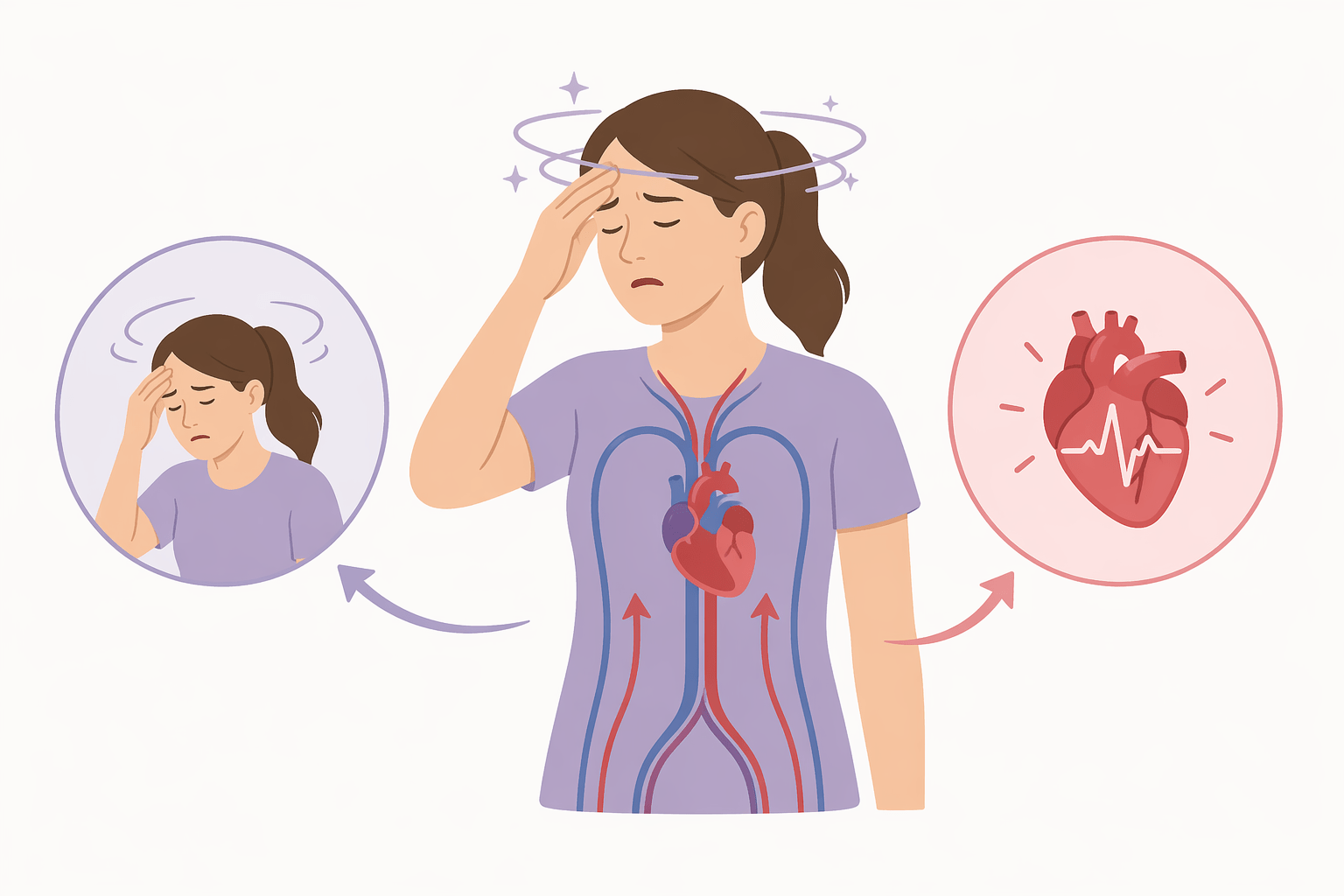

Feeling dizzy when you stand up or noticing a sudden increase in your heart rate can be confusing and frightening. These are common symptoms of Postural Orthostatic Tachycardia Syndrome, a condition that affects how your body regulates blood flow and heart rate.
In this guide, we’ll explain why POTS syndrome causes dizziness and a fast heart rate, how it affects your body, and what you can do to manage it.
What Is POTS Syndrome?
Postural Orthostatic Tachycardia Syndrome (POTS) is a disorder of the autonomic nervous system—the system responsible for controlling automatic body functions like heart rate, blood pressure, and digestion.
People with POTS experience a rapid increase in heart rate when they move from lying down to standing up, often accompanied by dizziness, weakness, or even fainting.
Why Does POTS Cause Dizziness?
Dizziness in POTS happens mainly due to poor blood circulation to the brain.
1. Blood Pooling in the Lower Body
When a healthy person stands up, the body quickly adjusts to keep blood flowing to the brain. But in POTS:
- Blood tends to pool in the legs and lower body
- Less blood reaches the brain
- This leads to dizziness or lightheadedness
This is why many people feel like they might faint when standing.
2. Drop in Effective Blood Flow to the Brain
Even if blood pressure appears normal, the brain may not get enough oxygen-rich blood, causing:
- Blurred vision
- Brain fog
- Weakness
- Dizziness
3. Dysfunction of the Autonomic Nervous System
The autonomic nervous system fails to regulate blood vessel tightening properly.
As a result:
- Blood vessels don’t constrict enough
- Blood doesn’t move efficiently upward
- The brain temporarily lacks proper circulation
Why Does POTS Cause a Fast Heart Rate?
A key feature of POTS is tachycardia (rapid heart rate) when standing.
1. Compensation for Low Blood Flow
Because less blood reaches the brain, the body tries to compensate by:
- Making the heart beat faster
- Increasing circulation
This rapid heartbeat is the body’s way of trying to restore blood flow to the brain.
2. Overactive “Fight-or-Flight” Response
POTS can trigger the body’s stress system, known as the sympathetic nervous system.
This leads to:
- Increased adrenaline release
- Faster heart rate
- Feelings of anxiety or panic
3. Reduced Blood Volume
Some people with POTS have lower blood volume, meaning:
- There isn’t enough blood circulating
- The heart works harder and faster to compensate
Read our latest blog for more information: https://drcynthia.com/blog/why-pots-symptoms-flare-up-and-how-to-manage-them-effectively/
Common Symptoms of POTS Syndrome
In addition to dizziness and a fast heart rate, POTS can cause:
- Lightheadedness when standing
- Fainting or near-fainting
- Fatigue
- Brain fog
- Chest discomfort
- Nausea
- Headaches
Symptoms often worsen after standing for long periods, dehydration, or heat exposure.
Who Is Most Affected by POTS?
POTS is more common in:
- Teenagers and young adults
- Women (especially ages 15–50)
- People recovering from viral illnesses
- Individuals with autoimmune conditions
How Is POTS Diagnosed?
Doctors diagnose POTS based on symptoms and heart rate changes.
Common Tests Include:
- Tilt table test (measures heart rate and blood pressure changes)
- Heart rate monitoring
- Blood tests to rule out other conditions
A diagnosis is typically made when the heart rate increases by 30+ beats per minute within 10 minutes of standing (without a major drop in blood pressure).
How to Manage Dizziness and Fast Heart Rate in POTS
While there is no single cure, symptoms can be effectively managed.
1. Stay Hydrated
Drink plenty of fluids to increase blood volume and reduce dizziness.
2. Increase Salt Intake
Salt helps retain fluids and improves circulation (only under medical advice).
3. Gradual Movement
Avoid sudden standing. Move slowly from lying to sitting to standing.
4. Compression Stockings
These help prevent blood from pooling in the legs.
5. Exercise Regularly
Low-impact exercises like walking or cycling can improve circulation over time.
6. Medications
Doctors may prescribe medications to:
- Control heart rate
- Improve blood flow
- Manage symptoms
When Should You See a Doctor?
You should seek medical advice if you experience:
- Frequent dizziness or fainting
- Rapid heart rate when standing
- Ongoing fatigue or weakness
- Symptoms affecting daily life
Early diagnosis can help prevent complications and improve quality of life.
Book an appointment with Dr Cynthia Thaik
Can POTS Be Linked to Anxiety?
Yes, POTS symptoms can feel similar to anxiety, but they are not purely psychological.
- The rapid heart rate and dizziness are physical
- However, symptoms may trigger anxiety over time
Proper diagnosis is important to avoid confusion between the two.
Final Thoughts
So, why does POTS syndrome cause dizziness and a fast heart rate?
It happens because the body struggles to regulate blood flow when you stand up. Blood pools in the lower body, reducing circulation to the brain, and the heart speeds up to compensate.
Although it can feel overwhelming, POTS syndrome is manageable with the right lifestyle changes and medical support.
FAQs
1- Is POTS syndrome dangerous?
It is usually not life-threatening but can significantly affect daily life.
2- Can POTS go away on its own?
Some people improve over time, especially younger patients.
3- Why does my heart race when I stand up?
This is a key symptom of POTS due to poor blood flow regulation.
4- Can dehydration worsen POTS symptoms?
Yes, dehydration can increase dizziness and heart rate.
5- How can I reduce dizziness quickly?
Sit or lie down, drink water, and elevate your legs.
Click on this link for more information and get in touch with the doctor: https://g.co/kgs/yAfjNB9