We have moved to
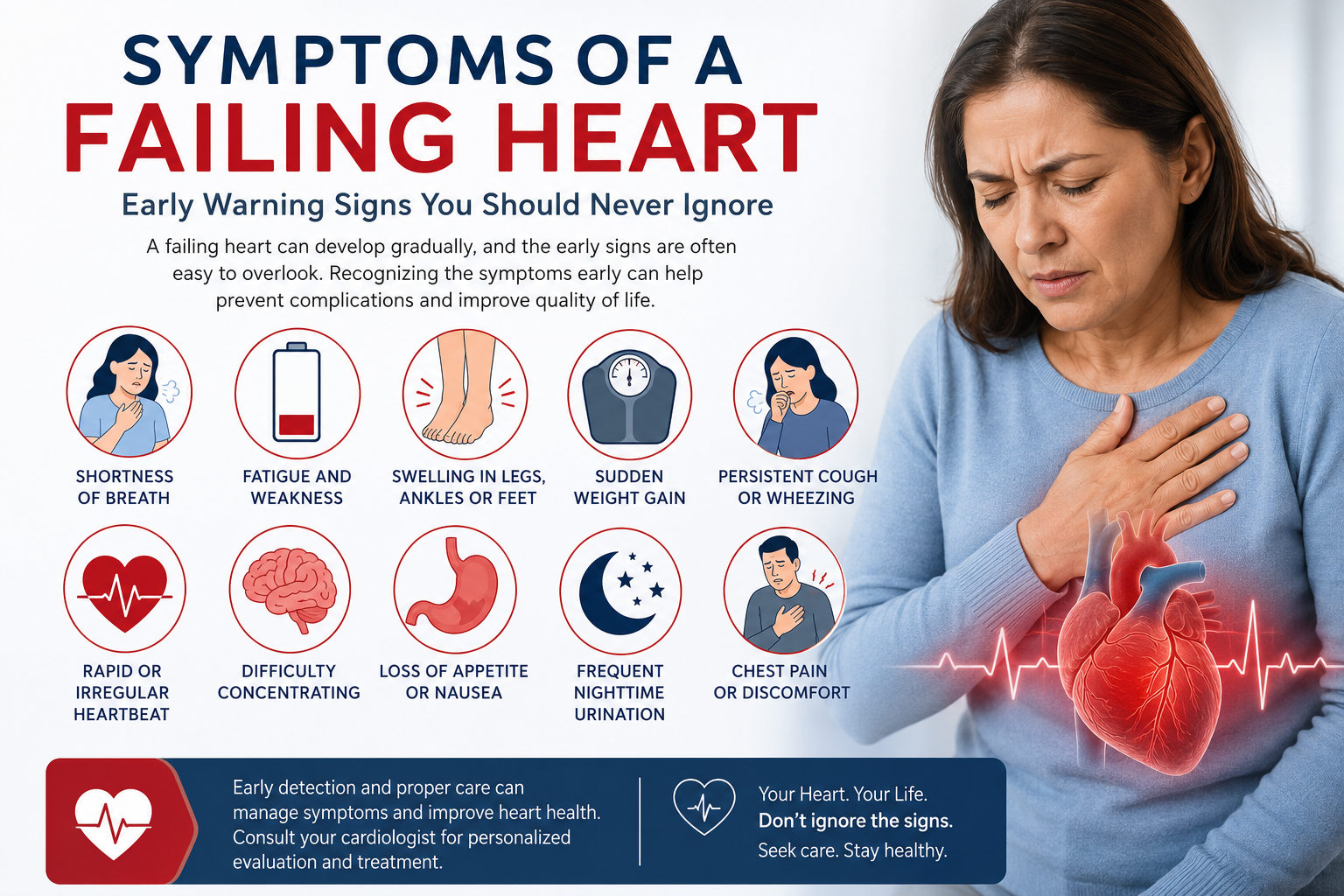

Your heart works around the clock to supply oxygen-rich blood to every part of your body. When it begins to weaken, your body often sends warning signals long before a medical emergency occurs. Recognizing the symptoms of a failing heart early can make a significant difference in preventing complications and improving long-term heart health.
Many people mistakenly believe heart failure means the heart has completely stopped working. In reality, heart failure is a condition in which the heart cannot pump blood efficiently enough to meet the body’s needs. It usually develops gradually, although symptoms can sometimes appear suddenly. Early diagnosis and treatment can slow disease progression and improve quality of life.
At Dr. Cynthia’s practice, the focus is on combining advanced cardiology with holistic lifestyle strategies to help patients understand the root causes of heart disease rather than simply treating symptoms.
What Does a Failing Heart Mean?
Heart failure occurs when the heart muscle becomes too weak or too stiff to pump blood effectively. As circulation decreases, fluid may accumulate in the lungs, legs, abdomen, and other tissues, leading to a variety of symptoms.
Heart failure can affect:
- The left side of the heart
- The right side of the heart
- Both sides simultaneously
Common causes include:
- Coronary artery disease
- High blood pressure
- Previous heart attack
- Heart valve disease
- Cardiomyopathy
- Diabetes
- Obesity
- Certain irregular heart rhythms
Common Symptoms of a Failing Heart
1. Shortness of Breath
One of the earliest and most recognizable symptoms is breathlessness.
You may notice difficulty breathing:
- While walking
- During exercise
- Climbing stairs
- When lying flat
- During sleep
As the heart weakens, fluid backs up into the lungs, making breathing increasingly difficult.
2. Extreme Fatigue
Feeling unusually tired despite getting enough sleep can indicate that your organs and muscles are not receiving enough oxygen-rich blood.
Patients often describe:
- Constant exhaustion
- Reduced stamina
- Difficulty performing daily activities
- Feeling drained after minor physical activity
3. Swelling in the Legs, Ankles, or Feet
Poor circulation allows fluid to accumulate in the lower body.
Look for:
- Puffy ankles
- Swollen feet
- Tight shoes
- Swelling that worsens throughout the day
This swelling, known as edema, is a hallmark symptom of heart failure.
4. Rapid Weight Gain
A sudden increase of several pounds over a few days may not be body fat—it may be fluid retention caused by worsening heart failure.
Unexpected weight gain should never be ignored, especially if accompanied by swelling or shortness of breath.
5. Persistent Cough or Wheezing
A chronic cough—especially one producing white or pink frothy mucus—can occur when fluid builds up inside the lungs.
Many patients mistake this symptom for allergies, asthma, or bronchitis.
6. Fast or Irregular Heartbeat
When the heart struggles to pump enough blood, it may compensate by beating faster.
Symptoms include:
- Heart palpitations
- Racing heartbeat
- Fluttering sensations
- Irregular pulse
7. Difficulty Concentrating
Reduced blood flow can affect brain function.
People with heart failure sometimes experience:
- Poor concentration
- Confusion
- Memory problems
- Mental fog
These symptoms are more common in advanced heart failure.
8. Loss of Appetite or Nausea
Fluid buildup around digestive organs may lead to:
- Feeling full quickly
- Poor appetite
- Nausea
- Abdominal discomfort
These symptoms are often overlooked because they seem unrelated to heart health.
9. Frequent Nighttime Urination
Many people with heart failure notice increased urination during the night as fluid that accumulated in the legs during the day returns to the bloodstream when lying down.
10. Chest Pain
Although chest pain is more commonly associated with a heart attack, it may occur if heart failure is caused by underlying coronary artery disease or an acute cardiac event.
Seek emergency medical attention immediately if chest pain is severe, persistent, or accompanied by shortness of breath, sweating, or fainting.
Risk Factors for Heart Failure
You may have a higher risk if you have:
- High blood pressure
- Diabetes
- High cholesterol
- Obesity
- Smoking history
- Family history of heart disease
- Previous heart attack
- Sleep apnea
- Chronic kidney disease
Managing these conditions early can significantly reduce your risk of developing heart failure.
When Should You See a Cardiologist?
Schedule an evaluation if you experience:
- Ongoing shortness of breath
- Swelling in your legs
- Unexplained fatigue
- Heart palpitations
- Sudden weight gain
- Reduced exercise tolerance
Early diagnosis often includes:
- Electrocardiogram (ECG)
- Echocardiogram
- Blood tests
- Chest X-ray
- Cardiac imaging when appropriate
A Holistic Approach to Heart Health
While medications and evidence-based medical care remain essential for many patients, heart health also benefits from addressing lifestyle factors. A comprehensive approach may include:
- Heart-healthy nutrition
- Blood pressure management
- Stress reduction
- Regular physical activity tailored to your condition
- Weight management
- Better sleep habits
- Smoking cessation
This aligns well with Dr. Cynthia’s integrative philosophy of combining conventional cardiology with preventive and lifestyle-focused care.
Can Heart Failure Be Prevented?
In many cases, yes. You can lower your risk by:
- Maintaining healthy blood pressure
- Keeping cholesterol under control
- Managing diabetes
- Exercising regularly
- Eating a Mediterranean-style diet
- Avoiding smoking
- Limiting alcohol
- Scheduling regular cardiovascular checkups
Prevention is often the most effective treatment.
FAQs
- What is usually the first symptom of a failing heart?
Shortness of breath during activity or while lying down is often one of the earliest symptoms. Fatigue and reduced exercise tolerance are also common. - Can heart failure develop without chest pain?
Yes. Many people experience fatigue, swelling, breathlessness, or palpitations without chest pain. - Is heart failure reversible?
Some underlying causes can be treated or improved, and many people live well with heart failure through medications, lifestyle changes, and regular medical care. The outlook depends on the specific cause and severity. - What causes swelling in heart failure?
A weakened heart allows fluid to accumulate in the legs, ankles, feet, abdomen, and sometimes the lungs, leading to edema. - When should I seek emergency care?
Call emergency services immediately if you experience severe chest pain, sudden difficulty breathing, fainting, blue lips, or rapidly worsening symptoms.