We have moved to
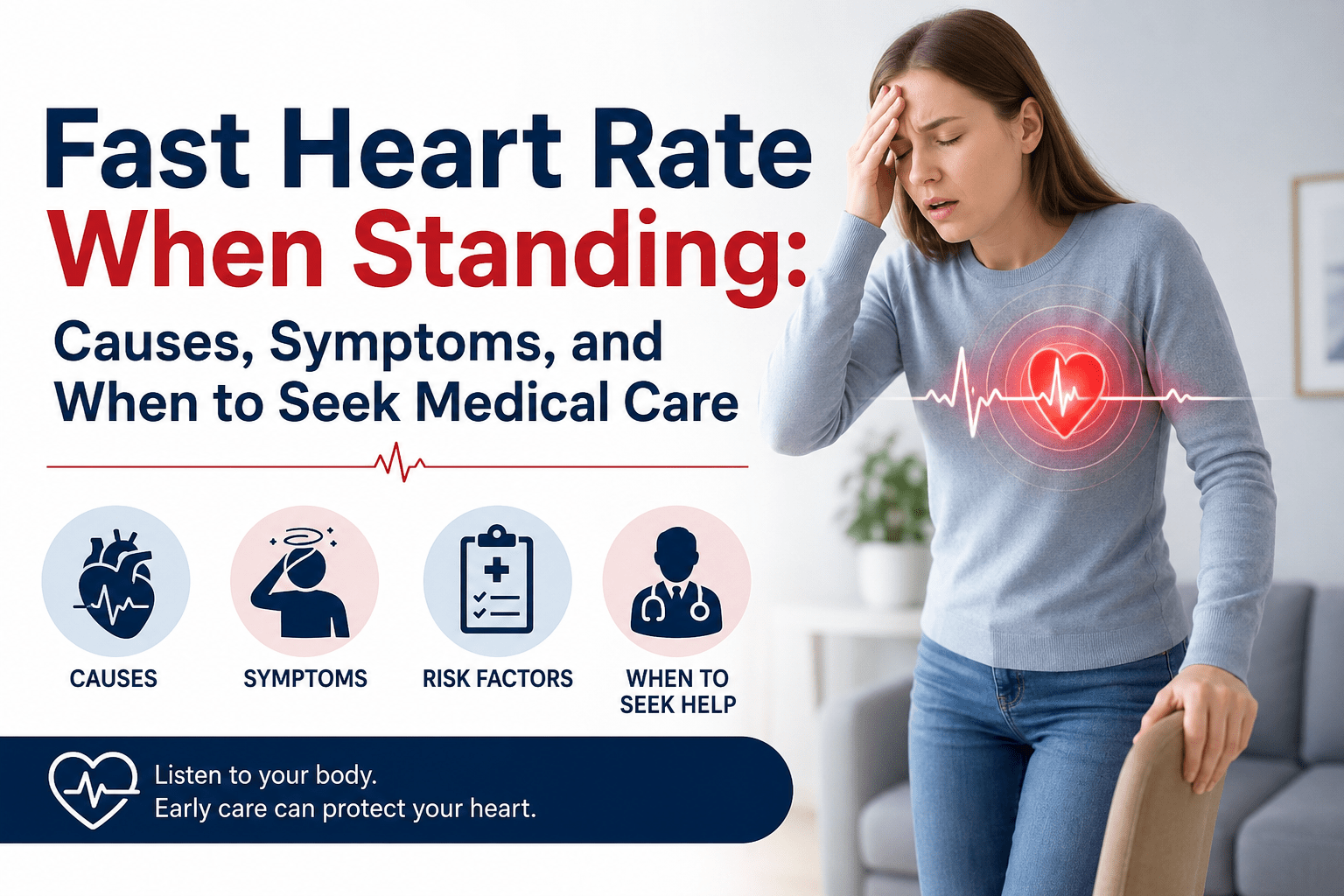

Have you ever stood up from a chair or bed and suddenly felt your heart racing? While it’s normal for your heart rate to increase slightly when you stand, a fast heart rate when standing that is frequent, excessive, or accompanied by symptoms like dizziness or fainting may indicate an underlying medical condition.
Your heart works continuously to pump blood throughout your body. When you stand, gravity causes blood to pool in your legs, and your heart temporarily beats faster to maintain healthy blood flow to your brain. However, if your heart rate rises significantly or symptoms persist, it’s important to seek medical evaluation.
Also Read – How to Recognize Woman High Cholesterol Symptoms
Why Does Your Heart Rate Increase When Standing?
Standing causes a temporary shift in blood circulation. To compensate, your autonomic nervous system signals your heart to beat faster and your blood vessels to tighten. This response usually lasts only a few seconds.
A larger-than-normal increase in heart rate may be linked to conditions such as dehydration, low blood pressure, anemia, thyroid disorders, or Postural Orthostatic Tachycardia Syndrome (POTS).
Common Symptoms
A fast heart rate when standing often occurs alongside other symptoms, including:
- Heart palpitations
- Dizziness or lightheadedness
- Feeling faint
- Brain fog
- Fatigue
- Blurred vision
- Shortness of breath
- Chest discomfort
- Weakness
- Exercise intolerance
If these symptoms occur frequently or interfere with your daily activities, they should not be ignored.
Also Read – What Are the Best Over-the-Counter Medications for Chest Pain Relief?
What Causes a Fast Heart Rate When Standing?
Several conditions can contribute to this symptom.
Dehydration
When your body lacks enough fluids, blood volume decreases, forcing your heart to pump faster to circulate blood effectively. Staying well-hydrated is one of the simplest ways to reduce symptoms.
Postural Orthostatic Tachycardia Syndrome (POTS)
POTS is one of the most recognized causes of a fast heart rate when standing. It affects the autonomic nervous system, causing the heart rate to increase excessively after standing without a significant drop in blood pressure.
People with POTS often experience chronic fatigue, dizziness, brain fog, and exercise intolerance.
Low Blood Pressure
Orthostatic hypotension causes blood pressure to drop when standing, reducing blood flow to the brain and triggering a rapid heartbeat.
Anemia
Low red blood cell counts limit oxygen delivery throughout the body. Your heart compensates by beating faster to meet your body’s oxygen needs.
Thyroid Disorders
An overactive thyroid speeds up metabolism and can lead to persistent tachycardia, even during normal daily activities.
Anxiety and Stress
Stress hormones such as adrenaline naturally increase heart rate. While anxiety alone doesn’t always explain recurring symptoms, it can make existing cardiovascular conditions feel worse.
Also Read – Coping With Flare-Ups: Managing POTS Symptoms on Tough Days
When Should You See a Doctor?
Occasional episodes may not require treatment, but you should consult a healthcare provider if you experience:
- Repeated episodes of a racing heart
- Fainting or near-fainting
- Chest pain
- Difficulty breathing
- Severe dizziness
- Heart rate remaining elevated after standing
- Symptoms affecting work, exercise, or daily life
Early evaluation helps identify the underlying cause and ensures appropriate treatment.
How Is It Diagnosed?
Your healthcare provider will review your symptoms, medical history, and medications before performing a physical examination.
Diagnostic tests may include:
- Electrocardiogram (ECG)
- Holter monitor
- Blood pressure and heart rate measurements while lying and standing
- Blood tests to check for anemia or thyroid disorders
- Echocardiogram
- Tilt table test, especially if POTS is suspected
These tests help determine whether the rapid heart rate is related to a heart condition, autonomic dysfunction, or another medical issue.
Treatment Options
Treatment depends on the underlying cause rather than the symptom itself.
Many people benefit from simple lifestyle modifications, including:
- Drinking plenty of water throughout the day
- Increasing salt intake if recommended by a physician
- Standing up slowly after sitting or lying down
- Wearing compression stockings to improve circulation
- Engaging in regular, low-impact exercise
- Managing stress through relaxation techniques and adequate sleep
For conditions such as POTS or certain heart rhythm disorders, medications may be prescribed to help regulate heart rate and improve blood circulation.
An individualized treatment plan developed by a cardiologist is the most effective approach.
A Holistic Approach to Heart Health
In addition to conventional medical care, many patients benefit from a holistic approach that focuses on improving overall cardiovascular health. This may include heart-healthy nutrition, anti-inflammatory foods, stress management, restorative sleep, regular physical activity, and addressing nutritional deficiencies.
Rather than simply treating symptoms, holistic heart care aims to identify and address contributing factors that may be affecting the cardiovascular and autonomic nervous systems.
Frequently Asked Questions
1. Is a fast heart rate when standing normal?
A slight increase in heart rate when standing is a normal response as your body adjusts to gravity. However, if your heart rate increases significantly, remains elevated, or is accompanied by dizziness, fainting, or chest pain, it may indicate an underlying condition such as POTS, dehydration, or low blood pressure. A healthcare provider can help determine the cause.
2. What causes a fast heart rate when standing?
Several conditions can cause a fast heart rate when standing, including dehydration, Postural Orthostatic Tachycardia Syndrome (POTS), orthostatic hypotension, anemia, thyroid disorders, certain medications, and anxiety. Proper diagnosis is important because treatment depends on the underlying cause.
3. When should I see a doctor for a fast heart rate when standing?
You should seek medical advice if your fast heart rate when standing occurs frequently, lasts for several minutes, causes dizziness or fainting, or is accompanied by chest pain, shortness of breath, or an irregular heartbeat. Early evaluation can help identify any underlying cardiovascular or autonomic nervous system disorders.
4. How is a fast heart rate when standing diagnosed?
Doctors typically diagnose the cause through a medical history, physical examination, and tests such as an electrocardiogram (ECG), blood tests, Holter monitoring, orthostatic blood pressure measurements, or a tilt table test. These evaluations help determine whether the symptoms are related to POTS, heart rhythm disorders, or other medical conditions.
5. Can lifestyle changes help manage a fast heart rate when standing?
Yes. Many people experience symptom improvement by staying well-hydrated, standing up slowly, exercising regularly, managing stress, getting adequate sleep, and following a heart-healthy diet. Depending on the underlying condition, your healthcare provider may also recommend compression stockings, increased salt intake, or medications as part of your treatment plan.