We have moved to
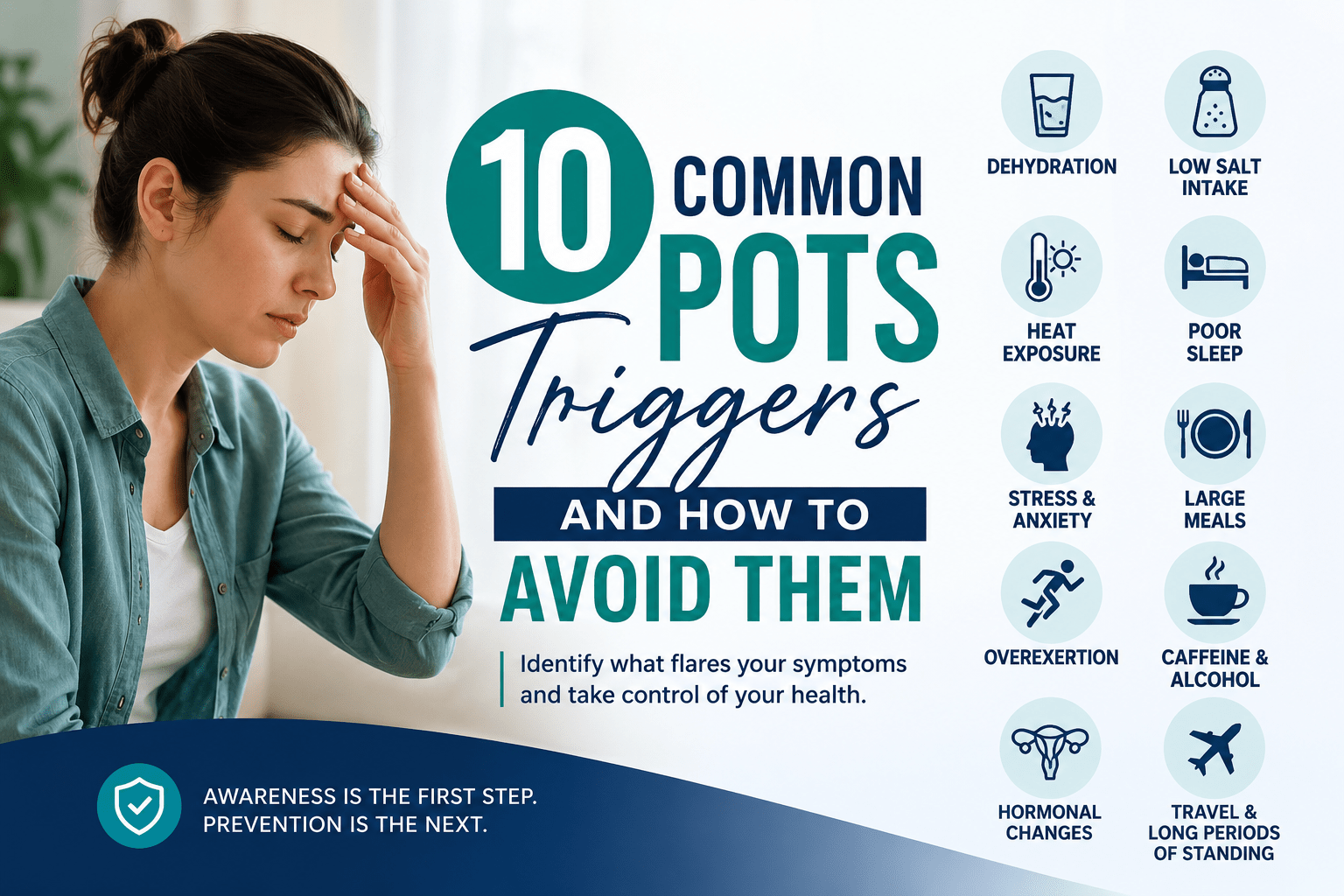

Living with Postural Orthostatic Tachycardia Syndrome (POTS) can be challenging, especially when symptoms seem to worsen unexpectedly. While every person experiences POTS differently, many flare-ups are linked to specific triggers. Understanding these triggers can help you take proactive steps to reduce symptom severity and improve your daily quality of life.
In this guide, we’ll explore the 10 most common POTS triggers and share practical strategies to help you avoid them.
Also Read – Medicinal Spices That Help Lower Blood Pressure
What Is a POTS Trigger?
A POTS trigger is anything that causes symptoms to worsen or leads to a flare-up. Common symptoms include:
- Rapid heartbeat upon standing
- Dizziness or lightheadedness
- Fainting or near-fainting
- Fatigue
- Brain fog
- Shortness of breath
- Headaches
- Nausea
Identifying your personal triggers is an important part of managing POTS effectively.
Also Read – What Are the Best Over-the-Counter Medications for Chest Pain Relief?
1. Dehydration
Dehydration is one of the most common triggers for POTS symptoms. When your body doesn’t have enough fluids, blood volume decreases, making it harder for your circulatory system to maintain normal blood flow.
How to Avoid It
- Drink plenty of water throughout the day.
- Increase fluid intake during exercise or hot weather.
- Discuss electrolyte replacement with your healthcare provider if appropriate.
2. Hot Weather and Heat Exposure
High temperatures can cause blood vessels to widen, making blood pool in the lower body and increasing symptoms like dizziness and rapid heart rate.
How to Avoid It
- Stay indoors during the hottest part of the day.
- Wear lightweight, breathable clothing.
- Use cooling towels or portable fans.
- Take cool showers when needed.
3. Standing for Long Periods
Standing still allows blood to collect in the legs, reducing blood flow to the brain.
How to Avoid It
- Shift your weight frequently.
- Contract your calf muscles while standing.
- Sit whenever possible.
- Use compression garments if recommended by your healthcare provider.
4. Stress and Anxiety
Emotional stress activates the nervous system, which may worsen heart rate changes and increase fatigue or dizziness.
How to Avoid It
- Practice deep breathing exercises.
- Try meditation or mindfulness.
- Prioritize regular sleep.
- Seek support from a mental health professional if needed.
5. Lack of Sleep
Poor sleep can increase fatigue, brain fog, and reduce your body’s ability to regulate blood pressure and heart rate.
How to Avoid It
- Maintain a consistent bedtime.
- Limit screen time before bed.
- Create a cool, quiet sleeping environment.
- Aim for adequate nightly sleep.
6. Illness or Infection
Even mild illnesses like a cold or stomach virus can increase inflammation and dehydration, making POTS symptoms worse.
How to Avoid It
- Stay hydrated when sick.
- Rest as much as possible.
- Follow your healthcare provider’s treatment recommendations.
- Seek medical attention if symptoms become severe.
7. Overexertion
Exercise is beneficial for many people with POTS, but doing too much too quickly can trigger a flare.
How to Avoid It
- Follow a gradual exercise program.
- Pace your activities.
- Rest between workouts.
- Stop exercising if symptoms become severe.
8. Skipping Meals
Low blood sugar may contribute to weakness, dizziness, and fatigue.
How to Avoid It
- Eat regular meals.
- Choose balanced meals with protein, healthy fats, and complex carbohydrates.
- Keep healthy snacks available when away from home.
9. Alcohol
Alcohol can contribute to dehydration and widen blood vessels, both of which may worsen POTS symptoms.
How to Avoid It
- Limit or avoid alcohol.
- Stay hydrated if you choose to drink.
- Discuss alcohol use with your healthcare provider.
10. Hormonal Changes
Some people notice worsening symptoms during menstruation, pregnancy, or other hormonal changes.
How to Avoid It
- Track symptoms alongside your menstrual cycle.
- Stay hydrated.
- Plan for additional rest during difficult periods.
- Discuss symptom management with your healthcare provider.
How to Identify Your Personal POTS Triggers
Keeping a symptom journal can help identify patterns. Record:
- Daily symptoms
- Water intake
- Meals
- Exercise
- Weather conditions
- Sleep duration
- Stress levels
- Medications
- Menstrual cycle (if applicable)
Over time, this information may help you and your healthcare provider develop a more personalized management plan.
Also Read – How Turmeric Is Good for High Blood Pressure and Cholesterol
Tips to Reduce POTS Flare-Ups
While triggers vary from person to person, these healthy habits may help reduce flare frequency:
- Stay well hydrated.
- Follow your healthcare provider’s recommendations for salt intake, if appropriate.
- Wear compression garments if advised.
- Exercise gradually under medical guidance.
- Avoid prolonged standing.
- Prioritize quality sleep.
- Manage stress through relaxation techniques.
- Eat balanced meals consistently.
- Monitor symptoms and adjust activities when needed.
When Should You See a Doctor?
If your symptoms suddenly worsen, become more frequent, or interfere with daily life, contact your healthcare provider. Seek immediate medical care if you experience:
- Loss of consciousness
- Chest pain
- Severe shortness of breath
- Persistent rapid heartbeat
- New or unusual symptoms
Prompt evaluation can help rule out other conditions and ensure your treatment plan is appropriate.
Frequently Asked Questions
What is the biggest trigger for POTS?
Dehydration, heat exposure, prolonged standing, illness, and stress are among the most commonly reported triggers. However, triggers vary from person to person.
Can exercise make POTS worse?
Exercise can temporarily worsen symptoms if done too intensely or without proper guidance. Many people benefit from a gradual, supervised exercise program tailored to their condition.
Does weather affect POTS?
Yes. Hot and humid weather can increase blood vessel dilation and dehydration, making symptoms more noticeable.
Can diet help manage POTS symptoms?
A balanced diet, regular meals, adequate hydration, and appropriate electrolyte intake may help support symptom management. Dietary recommendations should be individualized with a healthcare professional.