We have moved to
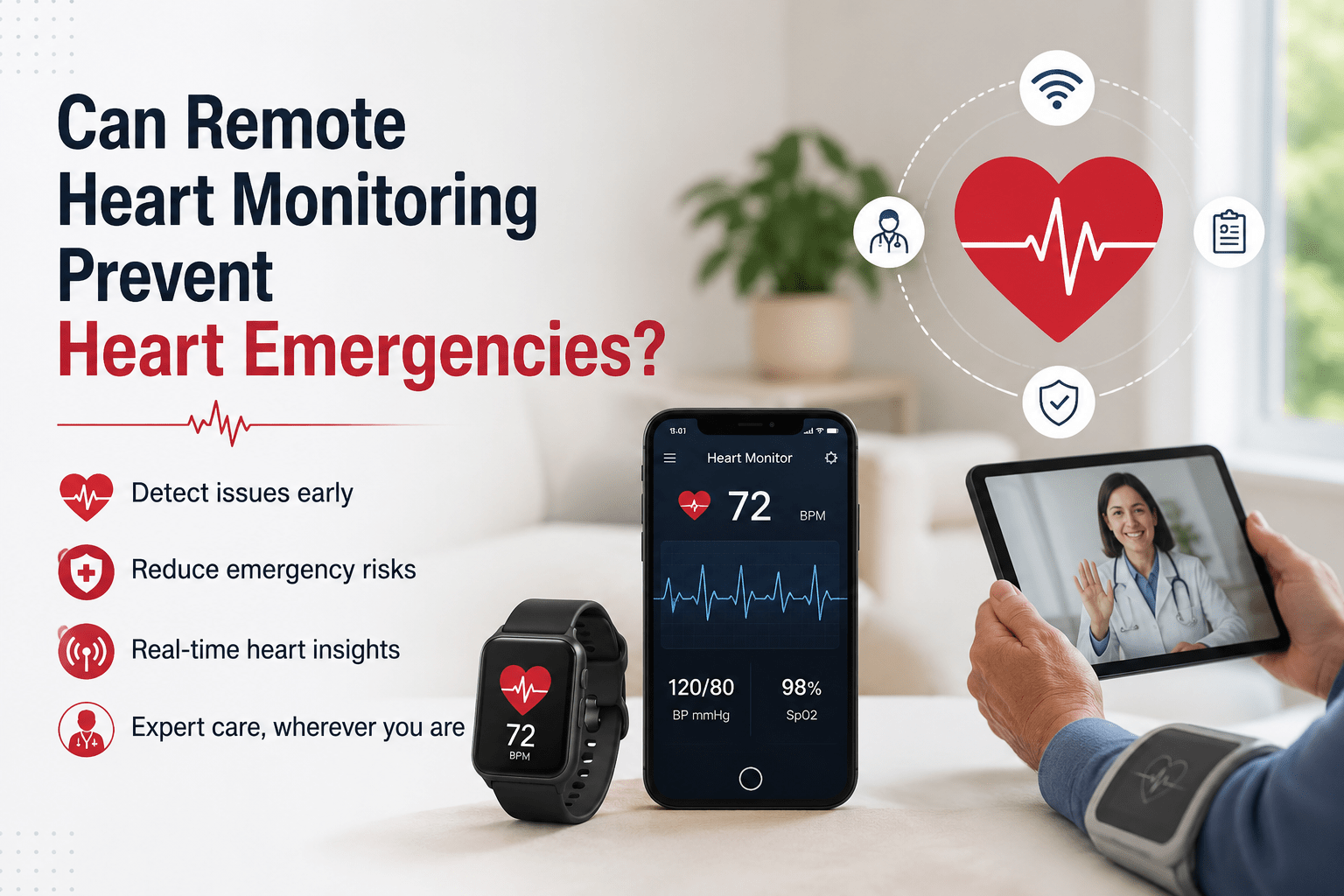

Heart disease remains one of the leading causes of hospitalization worldwide. While some cardiac events occur suddenly, many are preceded by subtle changes in heart rhythm, heart rate, or blood pressure that often go unnoticed. Thanks to advances in digital health technology, remote heart monitoring is helping cardiologists detect these warning signs earlier, allowing timely intervention before a serious heart emergency develops.
If you have a history of heart disease, irregular heartbeats, heart failure, high blood pressure, or unexplained symptoms like dizziness or palpitations, remote monitoring may provide an extra layer of protection. It offers continuous insight into your heart health while allowing your healthcare team to monitor your condition without requiring frequent office visits.
In this guide, we’ll explore how remote heart monitoring works, who can benefit from it, and whether it can truly help prevent heart emergencies.
Also Read – How to Recognize Woman High Cholesterol Symptoms
What Is Remote Heart Monitoring?
Remote heart monitoring, also known as remote cardiac monitoring, uses connected medical devices to collect information about your heart outside of a hospital or clinic. These devices securely transmit your health data to your cardiology team for review.
Depending on your condition, monitored information may include:
- Heart rate
- Heart rhythm (ECG)
- Blood pressure
- Oxygen saturation
- Weight (important for heart failure patients)
- Activity levels
- Symptoms reported by the patient
Many wearable devices automatically send readings to your healthcare provider, allowing them to identify concerning changes as they occur.
Also Read – What Are the Best Over-the-Counter Medications for Chest Pain Relief?
How Does Remote Heart Monitoring Work?
The process is designed to be simple and convenient.
Step 1: Device Setup
Your cardiologist recommends a monitoring device based on your medical condition. This may include wearable ECG monitors, wireless blood pressure monitors, or implantable cardiac devices.
Step 2: Daily Monitoring
The device continuously or periodically records heart-related information while you go about your normal activities.
Step 3: Secure Data Transmission
Collected data is transmitted through a secure platform to your healthcare provider.
Step 4: Clinical Review
Your cardiology team reviews the information and looks for abnormal patterns that may indicate worsening heart health.
Step 5: Early Intervention
If concerning changes are detected, your provider may contact you to:
- Adjust medications
- Recommend additional testing
- Schedule an appointment
- Advise emergency evaluation if necessary
This proactive approach allows many problems to be addressed before they become life-threatening.
Can Remote Heart Monitoring Actually Prevent Heart Emergencies?
While remote heart monitoring cannot prevent every heart attack or cardiac emergency, it can significantly reduce the risk of complications by identifying warning signs earlier.
Early detection allows healthcare providers to intervene before a condition becomes severe.
Remote monitoring may help identify:
- Dangerous heart rhythm abnormalities
- Worsening heart failure
- Extremely high or low heart rates
- Blood pressure changes
- Fluid retention
- Medication-related complications
By acting early, many hospitalizations and emergency visits may be avoided.
Also Read – Coping With Flare-Ups: Managing POTS Symptoms on Tough Days
Conditions That Benefit from Remote Heart Monitoring
Remote monitoring is particularly valuable for patients with chronic cardiovascular conditions.
Atrial Fibrillation (AFib)
AFib often occurs intermittently, making it difficult to detect during a routine office visit. Continuous monitoring increases the likelihood of identifying abnormal rhythms and initiating treatment sooner.
Heart Failure
Weight gain, fluid retention, and changes in heart rate can signal worsening heart failure days before symptoms become severe.
Early intervention may reduce the need for hospitalization.
High Blood Pressure
Connected blood pressure monitors help physicians determine whether treatment is effectively controlling hypertension between appointments.
Heart Palpitations
Patients experiencing occasional palpitations can benefit from continuous monitoring that captures episodes as they happen, improving diagnostic accuracy.
Recovery After Heart Surgery
Patients recovering from cardiac procedures can be monitored remotely to ensure healing progresses safely while reducing unnecessary clinic visits.
Benefits of Remote Heart Monitoring
Earlier Detection of Problems
Continuous monitoring can identify abnormalities that would otherwise remain unnoticed between appointments.
Faster Medical Response
Instead of waiting weeks for a follow-up appointment, providers can review transmitted data and recommend treatment sooner.
Personalized Care
Your treatment plan can be adjusted based on real-time health information rather than isolated office measurements.
Greater Peace of Mind
Knowing your heart is being monitored provides reassurance, particularly for patients living with chronic heart conditions.
Reduced Hospitalizations
Studies suggest remote monitoring may lower hospital admissions for selected patients, especially those with heart failure, by enabling earlier treatment adjustments.
Who Should Consider Remote Heart Monitoring?
You may benefit from remote monitoring if you have:
- Atrial fibrillation
- Heart failure
- Coronary artery disease
- High blood pressure
- Implanted pacemaker or defibrillator
- Frequent heart palpitations
- Unexplained dizziness or fainting
- Recovery after heart surgery
- High cardiovascular risk factors
Your cardiologist will determine whether remote monitoring is appropriate based on your medical history.
What Remote Monitoring Cannot Do
Although remote monitoring is highly valuable, it has limitations.
It should never replace emergency medical care.
If you experience symptoms such as:
- Severe chest pain
- Sudden shortness of breath
- Loss of consciousness
- Symptoms of stroke
- Persistent crushing chest pressure
Call emergency services immediately rather than waiting for remote monitoring alerts.
Remote monitoring is designed to complement—not replace—traditional medical care.
The Role of Preventive Cardiology
Preventive cardiology focuses on identifying risk factors before serious disease develops.
Remote monitoring supports this approach by helping physicians:
- Track treatment effectiveness
- Monitor medication response
- Detect disease progression
- Encourage patient engagement
- Improve long-term heart health
When combined with healthy lifestyle habits, regular checkups, and personalized treatment, remote monitoring becomes a powerful tool for preventing complications.
Why Personalized Monitoring Matters
No two heart patients are alike. Some require continuous rhythm monitoring, while others benefit from daily blood pressure tracking or heart failure surveillance.
A personalized monitoring strategy allows cardiologists to focus on the information most relevant to each patient’s condition.
Practices offering concierge cardiology services can often provide more individualized monitoring, quicker communication, and faster adjustments to treatment when needed.
Tips to Get the Most from Remote Heart Monitoring
To maximize the benefits:
- Wear your monitoring device as instructed.
- Take measurements at the recommended times.
- Report new or worsening symptoms promptly.
- Continue taking medications as prescribed.
- Maintain regular follow-up appointments.
- Follow a heart-healthy diet and stay physically active, as advised by your healthcare provider.
Active participation helps your care team make informed decisions and respond quickly to changes.
Frequently Asked Questions
Is remote heart monitoring accurate?
Yes. Many FDA-cleared monitoring devices provide reliable clinical data that cardiologists use alongside your medical history and symptoms to guide treatment decisions.
Can remote heart monitoring detect a heart attack?
Remote monitoring may identify abnormal heart rhythms or other concerning changes, but it cannot reliably diagnose every heart attack. Any symptoms of a heart attack require immediate emergency medical attention.
Does remote heart monitoring replace visits to my cardiologist?
No. Remote monitoring complements in-person care by providing continuous health information between appointments.
Is remote heart monitoring only for older adults?
No. It can benefit adults of various ages with heart conditions, inherited cardiac disorders, unexplained palpitations, or elevated cardiovascular risk.
How often is my heart data reviewed?
The frequency depends on your monitoring plan, device type, and medical condition. Some systems generate alerts for urgent findings, while others are reviewed at scheduled intervals.