We have moved to
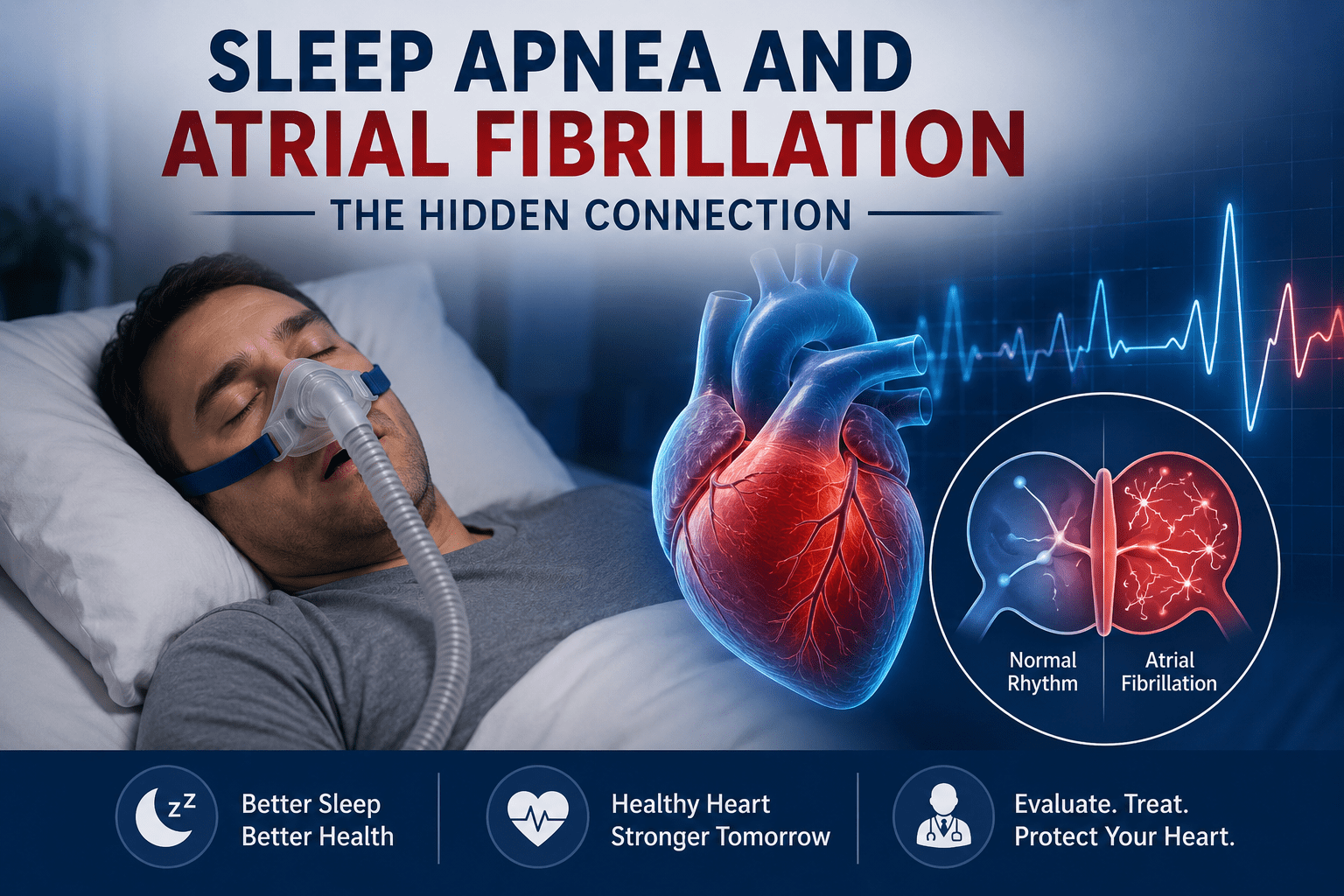

Sleep apnea and atrial fibrillation (AFib) are two common health conditions that can affect the heart, yet their connection is often overlooked. Research suggests that obstructive sleep apnea (OSA) may increase the risk of developing AFib and can also make it more difficult to manage.
Understanding the relationship between sleep apnea and atrial fibrillation can help people recognize potential warning signs, seek appropriate evaluation, and take steps to support better heart health.
Also Read – How Turmeric Is Good for High Blood Pressure and Cholesterol
What Is Sleep Apnea?
Sleep apnea is a sleep disorder in which breathing repeatedly stops and starts during sleep. The most common form, obstructive sleep apnea, occurs when the muscles and tissues in the upper airway relax and temporarily block airflow.
Common symptoms of sleep apnea include:
- Loud or frequent snoring
- Gasping or choking during sleep
- Pauses in breathing noticed by a partner
- Morning headaches
- Excessive daytime sleepiness
- Difficulty concentrating
- Waking with a dry mouth
- Poor-quality or restless sleep
Because these symptoms occur primarily at night, some people may have sleep apnea for years without realizing it.
Also Read – How to Recognize Woman High Cholesterol Symptoms
What Is Atrial Fibrillation?
Atrial fibrillation is an irregular heart rhythm that occurs when the upper chambers of the heart, called the atria, beat in an uncoordinated way.
Some people with AFib experience noticeable symptoms, while others have few or no symptoms. Possible signs include:
- Heart palpitations
- Rapid or irregular heartbeat
- Shortness of breath
- Fatigue
- Dizziness or lightheadedness
- Reduced exercise tolerance
- Chest discomfort
AFib deserves medical attention because it can increase the risk of blood clots and stroke.
How Are Sleep Apnea and Atrial Fibrillation Connected?
The relationship between sleep apnea and AFib involves several overlapping effects on the cardiovascular system.
1. Repeated Drops in Oxygen
During an episode of obstructive sleep apnea, airflow can become restricted or stop temporarily. This may cause oxygen levels to fall. Repeated episodes of low oxygen can place stress on the cardiovascular system and contribute to changes that may promote abnormal heart rhythms.
2. Increased Pressure on the Heart
When a person struggles to breathe against a blocked airway, pressure inside the chest can change. Over time, repeated nighttime breathing disturbances may place additional stress on the heart and blood vessels.
3. Activation of the Stress Response
Sleep apnea can repeatedly activate the body’s sympathetic nervous system, sometimes described as the “fight-or-flight” response. This can cause temporary increases in heart rate and blood pressure.
Frequent nighttime surges in stress hormones may contribute to an environment that is less favorable for maintaining a stable heart rhythm.
4. Inflammation and Structural Changes
Untreated sleep apnea has been associated with inflammation, oxidative stress, and changes in cardiovascular function. Long-term effects can contribute to structural and electrical changes in the heart, potentially increasing susceptibility to AFib.
5. High Blood Pressure
Sleep apnea and high blood pressure frequently occur together. Elevated blood pressure can increase the workload on the heart and is also an important risk factor for atrial fibrillation.
Also Read – Coping With Flare-Ups
Can Sleep Apnea Trigger Atrial Fibrillation?
Sleep apnea does not mean that a person will automatically develop AFib. However, untreated OSA is considered an important cardiovascular risk factor and has been associated with a higher likelihood of AFib.
For someone who already has AFib, untreated sleep apnea may also contribute to recurrent episodes or make rhythm management more challenging.
This is why evaluating sleep health can be an important part of a comprehensive approach to atrial fibrillation treatment.
Can Treating Sleep Apnea Help AFib?
Treating sleep apnea may be beneficial for cardiovascular health and may help reduce factors that contribute to abnormal heart rhythms.
Continuous positive airway pressure (CPAP) therapy is commonly prescribed for people with obstructive sleep apnea. Depending on the individual, treatment may also involve weight management, positional therapy, oral appliances, lifestyle changes, or other approaches recommended by a sleep specialist.
For people with AFib, treating sleep apnea should be viewed as part of overall risk-factor management rather than a replacement for appropriate AFib treatment.
Who Should Be Evaluated for Sleep Apnea?
Consider discussing sleep apnea screening with a healthcare professional if you:
- Snore loudly on a regular basis
- Wake up gasping or choking
- Experience unexplained daytime fatigue
- Have been told that you stop breathing during sleep
- Have difficult-to-control high blood pressure
- Have atrial fibrillation
- Experience nighttime heart palpitations
- Have other risk factors for obstructive sleep apnea
A healthcare professional can determine whether a sleep study or other evaluation is appropriate.
Also Read – What Are the Best Over-the-Counter Medications for Chest Pain Relief?
Sleep Apnea and AFib: What You Can Do
If you have both sleep apnea and atrial fibrillation, managing the conditions together may provide a more complete approach to cardiovascular care.
Helpful steps may include:
- Get evaluated for sleep apnea if you have symptoms or risk factors.
- Follow your prescribed sleep apnea treatment consistently.
- Monitor your blood pressure and discuss abnormal readings with your healthcare provider.
- Limit factors that may worsen AFib, such as excessive alcohol consumption and poor sleep.
- Maintain regular physical activity when medically appropriate.
- Take prescribed heart medications as directed.
- Discuss recurrent palpitations or AFib episodes with your cardiologist.
When Should You Seek Medical Care?
New or worsening heart palpitations, shortness of breath, dizziness, fainting, or unusual fatigue should not be ignored.
Seek emergency medical attention for severe chest pain, significant difficulty breathing, fainting, or symptoms that could indicate a stroke, such as sudden weakness, facial drooping, confusion, or difficulty speaking.
Frequently Asked Questions
Can sleep apnea cause atrial fibrillation?
Sleep apnea may increase the risk of developing AFib by contributing to intermittent low oxygen levels, blood pressure changes, nervous-system activation, inflammation, and cardiovascular stress. It does not mean everyone with sleep apnea will develop AFib.
Does CPAP help with atrial fibrillation?
Treating obstructive sleep apnea with CPAP can improve sleep-disordered breathing and may support cardiovascular health. Some studies suggest that treating OSA may also help reduce AFib recurrence in certain patients, although individual results vary.
Can AFib be worse at night?
Some people notice AFib episodes or palpitations at night. Sleep apnea, alcohol, stress, poor sleep, and other factors may contribute to nighttime symptoms.
Should people with AFib be tested for sleep apnea?
People with AFib who have symptoms or risk factors for sleep apnea may benefit from discussing screening with their healthcare provider. Identifying and treating sleep apnea can be an important part of comprehensive cardiovascular risk management.
Is snoring always a sign of sleep apnea?
No. Snoring does not automatically mean someone has sleep apnea. However, loud chronic snoring accompanied by gasping, breathing pauses, daytime sleepiness, or other symptoms warrants medical evaluation.