We have moved to
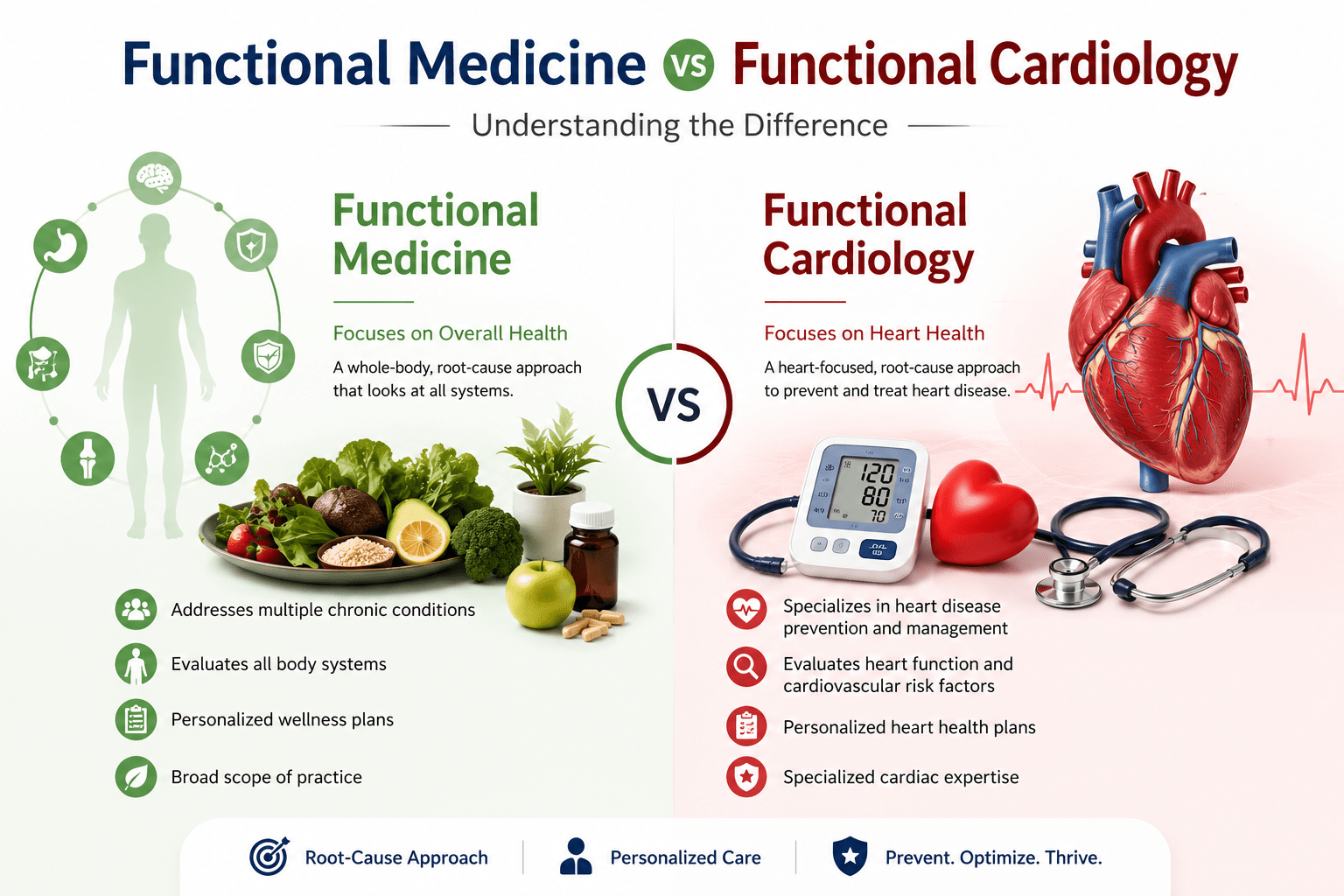

Heart disease remains one of the leading causes of health concerns worldwide, prompting many people to seek a more comprehensive approach to prevention and treatment. While functional medicine and functional cardiology share the goal of improving overall health, they differ in their focus, expertise, and treatment strategies. Understanding the distinction can help you choose the right approach for your specific health needs.
Also Read – What Are the Best Over-the-Counter Medications for Chest Pain Relief?
What Is Functional Medicine?
Functional medicine is a patient-centered, science-based approach that aims to identify and address the root causes of disease rather than simply treating symptoms. Instead of focusing on a single condition, functional medicine practitioners evaluate how lifestyle, nutrition, genetics, environment, and stress contribute to overall health.
Functional medicine commonly addresses conditions such as:
- Chronic inflammation
- Hormonal imbalances
- Digestive disorders
- Autoimmune diseases
- Metabolic syndrome
- Fatigue and low energy
- Blood sugar imbalances
The goal is to create personalized treatment plans that support long-term wellness through nutrition, lifestyle changes, supplements, stress management, and preventive care.
Also Read – Coping With Flare-Ups: Managing POTS Symptoms on Tough Days
What Is Functional Cardiology?
Functional cardiology is a specialized branch of functional medicine that focuses specifically on heart and cardiovascular health. It combines conventional cardiology with a root-cause approach to identify factors contributing to cardiovascular disease before they become serious problems.
Rather than only managing symptoms like high blood pressure or elevated cholesterol, functional cardiology looks at the underlying causes, including:
- Chronic inflammation
- Insulin resistance
- Nutritional deficiencies
- Oxidative stress
- Poor gut health
- Sleep disorders
- Stress and cortisol imbalance
- Environmental toxins
Functional cardiologists use advanced diagnostic testing alongside traditional cardiac evaluations to develop individualized treatment strategies.
Key Differences Between Functional Medicine and Functional Cardiology
Although both approaches focus on identifying and treating the root causes of illness, their areas of expertise and treatment goals differ.
Focus
Functional Medicine takes a whole-body approach by examining how different systems in the body work together. It aims to improve overall health and address the underlying causes of a wide range of chronic conditions.
Functional Cardiology, on the other hand, is dedicated specifically to cardiovascular health. It focuses on identifying and managing the root causes of heart disease while promoting long-term heart health.
Scope of Treatment
Functional medicine addresses multiple chronic health conditions, including digestive disorders, hormonal imbalances, autoimmune diseases, metabolic issues, and chronic inflammation.
Functional cardiology specializes in preventing, managing, and improving cardiovascular conditions such as high blood pressure, elevated cholesterol, coronary artery disease, heart rhythm disorders, and other heart-related concerns.
Evaluation Process
A functional medicine practitioner evaluates the body’s interconnected systems, considering factors such as nutrition, lifestyle, genetics, gut health, hormone balance, stress levels, and environmental influences.
A functional cardiologist places greater emphasis on heart-specific assessments, including cardiovascular risk factors, blood pressure, advanced cholesterol testing, inflammatory markers, metabolic health, and cardiac function.
Personalized Care
Functional medicine develops individualized wellness plans designed to improve overall health through nutrition, lifestyle modifications, supplementation, stress management, and preventive care.
Functional cardiology also provides personalized treatment plans but tailors them specifically to optimize cardiovascular health, reduce heart disease risk, and improve long-term cardiac function.
Expertise
Functional medicine offers a broad, comprehensive approach suitable for individuals managing multiple chronic health concerns.
Functional cardiology provides specialized expertise for patients seeking advanced prevention, diagnosis, and treatment strategies focused on maintaining a healthy heart and cardiovascular system.
Conditions Addressed by Functional Cardiology
Functional cardiology focuses on preventing and managing conditions such as:
- High blood pressure
- High cholesterol
- Coronary artery disease
- Heart disease prevention
- Metabolic syndrome
- Irregular heart rhythms
- Inflammation affecting heart health
- Elevated cardiovascular risk markers
- Family history of heart disease
Diagnostic Approach
Functional Medicine May Include:
- Comprehensive blood work
- Gut microbiome analysis
- Hormone testing
- Nutritional assessments
- Food sensitivity testing
- Lifestyle evaluations
Functional Cardiology May Include:
- Advanced lipid testing
- Inflammatory marker testing
- Coronary calcium scoring (when appropriate)
- Cardiac imaging
- Electrocardiogram (ECG)
- Echocardiogram
- Blood pressure monitoring
- Metabolic health assessments
Treatment Strategies
Both approaches emphasize personalized care, but their treatment plans differ based on the patient’s needs.
Functional Medicine Treatments
- Personalized nutrition plans
- Lifestyle modifications
- Exercise recommendations
- Stress management
- Sleep optimization
- Nutritional supplementation
- Gut health support
Functional Cardiology Treatments
- Heart-healthy nutrition
- Cardiovascular exercise programs
- Blood pressure management
- Cholesterol optimization
- Anti-inflammatory lifestyle changes
- Weight management
- Nutritional supplements when appropriate
- Coordination with conventional cardiac care when needed
Which Approach Is Right for You?
Functional medicine may be a good choice if you are experiencing multiple chronic health concerns, digestive issues, fatigue, hormone imbalances, or unexplained symptoms affecting your overall well-being.
Functional cardiology may be more appropriate if you have:
- High blood pressure
- High cholesterol
- A family history of heart disease
- Previous cardiovascular events
- Elevated cardiovascular risk
- Multiple heart disease risk factors
- Concerns about preventing future heart problems
In many cases, the two approaches complement each other, with functional cardiology providing specialized care for heart health within the broader framework of functional medicine.
Benefits of a Root-Cause Approach to Heart Health
A functional approach to cardiovascular care focuses on improving long-term wellness rather than simply managing symptoms. Potential benefits include:
- Earlier identification of cardiovascular risk factors
- Personalized prevention strategies
- Improved metabolic health
- Better management of inflammation
- Healthier lifestyle habits
- Enhanced overall quality of life
- Reduced risk of future heart complications
Conclusion
While functional medicine addresses the health of the entire body, functional cardiology specializes in identifying and treating the root causes of cardiovascular disease. Both emphasize personalized, preventive care, but functional cardiology provides targeted expertise for patients looking to improve heart health or reduce cardiovascular risk.
If you’re concerned about your heart health or have risk factors for cardiovascular disease, consulting a healthcare professional experienced in functional cardiology can help you develop a comprehensive, individualized plan to support lifelong cardiovascular wellness.