 We have moved to
Advanced EndoPAT Testing in Burbank and Los Angeles
If you are looking for advanced EndoPAT testing in Burbank or Los Angeles, the Holistic Healing Heart Center offers a trusted and non-invasive solution. This test helps evaluate endothelial function, which plays a vital role in heart and blood vessel health. Most importantly, early detection allows you to take control of conditions such as congestive heart failure and high blood pressure.
The endothelium lines your veins and arteries. When it becomes damaged, cardiovascular disease often follows. Fortunately, EndoPAT testing provides one of the most effective and least intrusive ways to assess this risk. As a result, patients gain valuable insight into their cardiovascular wellness before serious complications develop.
For decades, medical professionals have viewed endothelial dysfunction as an early warning sign of heart disease. In fact, it often appears long before symptoms such as high cholesterol or heart failure. Unlike many advanced heart conditions, endothelial dysfunction is both detectable and reversible when caught early.
What is EndoPAT Testing?
EndoPAT testing is an FDA-cleared method used to measure endothelial function. Specifically, it evaluates how well your blood vessels expand and contract. This process directly affects blood pressure regulation throughout the body.
The endothelium acts as more than a simple lining. It helps control inflammation, oxidative stress, and immune response. Therefore, healthy endothelial cells support overall balance and normal body function.
The test itself is administered in a similar way to how high blood pressure disease is measured. Your arteries’ blood flow is measured before and after a blood pressure cuff has been applied, by placing a finger (usually the index finger) in a small device. The procedure is non-invasive, no blood is drawn, and the procedure typically takes around 15 minutes. The test can identify conditions that may lead to risk factors such as high blood pressure, congestive heart failure, and cardiac heart failure. The EndoPAT test is favored by many health professionals including the team at the Holistic Healing Heart Center because of its non-invasive nature, its reliable, reproducible nature, and ease of use.
EndoPAT Signals: Normal Response

EndoPAT Signals: Impaired Response
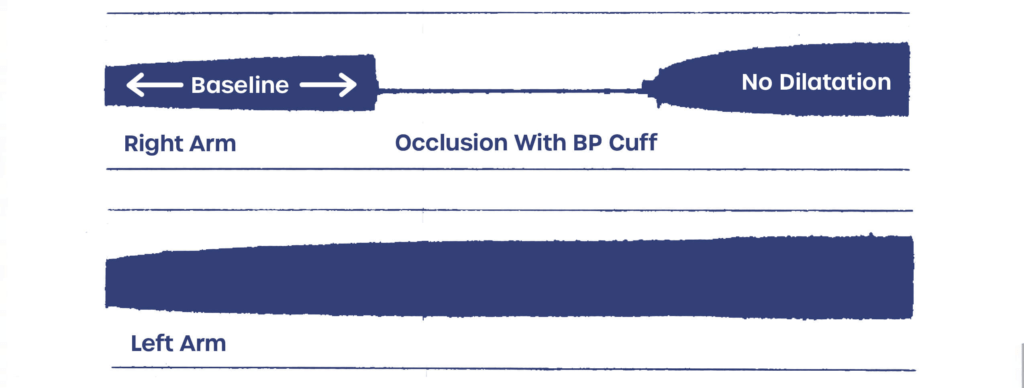
EndoPAT Signals: Spontaneous Vasoconstriction
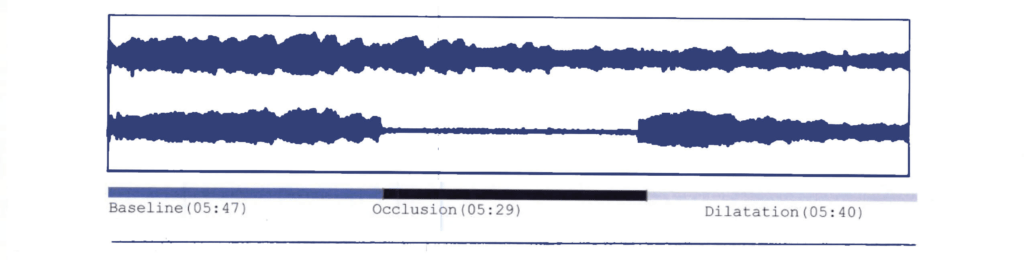
EndoPAT Signals: Raynaud’s Syndrome
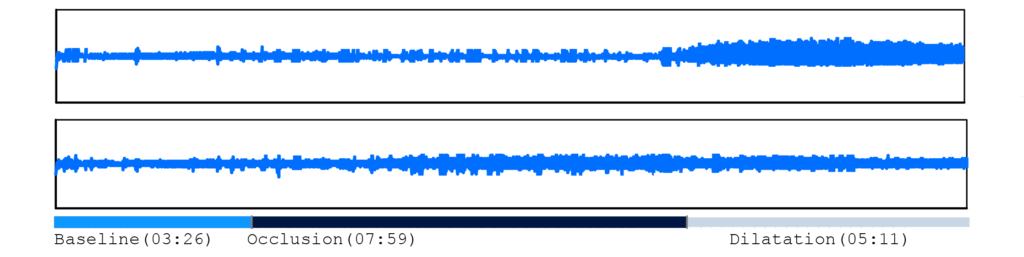
EndoPAT Signals: Systemic Lupus Vasculitis
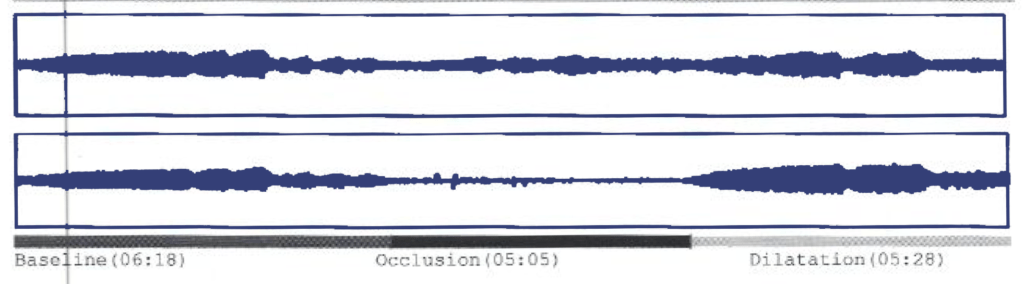
EndoPAT Signals: Post-COVID endothelial dysfunction
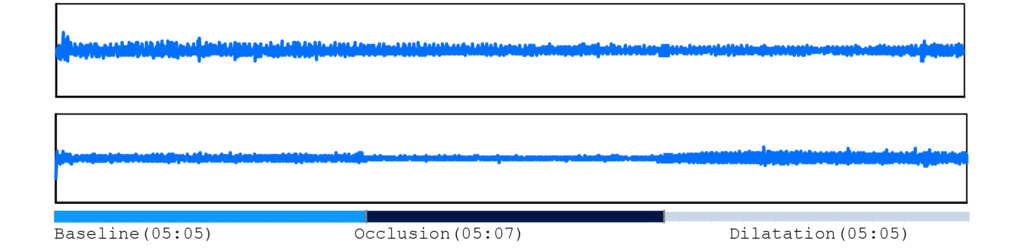
Assessing Endothelial Vasodilator Function
- Ensuring a comprehensive record of the patient’s physical, mental, and emotional background, along with a grasp of their lifestyle.
- Make sure that you are comfortable in the room where you are going to be tested, so that your body presents neutral results. The area you are tested in ought to be quiet, dimly-lit, and temperature-controlled.
- Remove restrictive clothing that could interfere with blood flow to the arms. Remove watches, rings, and any other jewelry on the hands or fingers.
- Silence all cellphones or paging devices.
- If you have any deformities or injuries on your fingers, notify the healthcare professional administering the test so they can adjust. Make sure your fingernails are clipped short for the test, and that you aren’t wearing acrylics.
- Your index finger is usually the one tested, but so long as it is the same finger on both hands, any will work.
- Make sure that you are at rest and comfortable during the test. A cardiovascular steady state is necessary to produce useful results.
Screening for Heart Health Discrepancies in Los Angeles at the Comprehensive Wellness Heart Center
There are different areas where vascular inflammation and unstable blood vessels can crop up.
- Inside The Blood Vessel: damage at this level is mainly the result of ‘junk’ circulating in the bloodstream. Unhealthy fats, excessive sugar, toxins (especially heavy metals and alcohol): all of these can cause irritation and inflammation. These in turn can cause vasoconstriction or spasms, which in turn create high blood pressure.
- In The Arterial Wall: ideally, artery walls should be thin, like the elastic skin of a balloon. However, what often happens as humans age and continue in unhealthy habits is that artery walls become calcified and less flexible. This can manifest as similar to the texture and flexibility of a garden hose, or in a more advanced state, like a lead pipe.
- In The Brain: the autonomic nervous system regulates the blood vessels, sending signals for the body to relax and expand, or tighten up and constrict. A balance between the sympathetic nervous system (SNS) and the parasympathetic nervous system (PNS) is necessary for the healthy regulation of our circulatory system. The Holistic Healing Heart Center also offers a Max Pulse evaluation that can aid in the assessment of these systems.
There are multiple disease states that can be caused by or lead to vascular inflammation and endothelial dysfunction.
- Stroke: there is significant evidence that endothelial dysfunction can lead to ischemic stroke.
- Hypertension: many vascular beds are damaged as a result of hypertension, but whether endothelial dysfunction causes hypertension more often or the other way round is not well-established.
- Diabetes: while the illness itself can lead to inflammation, it is thought to be more often the diet of type 2 diabetic and pre-diabetic people that leads to endothelial dysfunction.
- Cancer: the stress of endothelial dysfunction can make cancer more likely.
- Kidney Disease: even moderate kidney disease has been noted to cause inflammation and endothelial dysfunction.
Heart disease is a significant health issue for tens of millions of Americans, but it’s not only the heart that the EndoPAT test can protect. Every organ in the human body is endothelium-dependent, and this test can flag up concerns relating to many of them, from erectile dysfunction to kidney disease, heart attack, and stroke. If you are interested in booking an EndoPAT test with the Holistic Healing Heart Center, you can contact us through our website.
Meet Dr. Cynthia Thaik, MD - Functional & Integrative Cardiologist
Dr. Cynthia Thaik is a board-certified cardiologist who integrates functional medicine into her concierge practice with a specialized focus on cardiovascular and neurovascular optimization.
She devotes one week per month exclusively to functional medicine consultations via telehealth, allowing for deep, unrushed care. During this time, Dr. Thaik works closely with patients seeking transformation, root-cause healing, and individualized strategies grounded in integrative science.
Her approach combines:
- Precision diagnostics
- Advanced cardiovascular expertise
- Compassionate, heart-centered listening
- Extensive patient education
“Cardiovascular consultations and diagnostic services are covered by insurance. Functional medicine services are offered exclusively as concierge, self-pay services”
Schedule Your Telehealth Consultation with Dr. Cynthia
If you’re living with atrial fibrillation and want to explore natural treatment options, Dr. Cynthia is here to help. She provides telehealth consultations to guide you through personalized care plans, addressing lifestyle changes, supplement use, and stress management techniques tailored to your unique health needs.
Dr. Cynthia Thaik will perform a thorough cardiovascular assessment, looking at cardiac function, ruling out structural damage, checking paroxysmal atrial fibrillation symptoms, assessing the adverse effects of hypertension and dietary toxicity (alcohol, caffeine, excessive inflammatory foods), checking for vascular inflammation and endothelial dysfunction, and exploring the impact of stress on arterial tone and the autonomic nervous system regulation of the cardiovascular system.
The patient will have an option to receive individual coaching from a mindfulness instructor. Together, this integrative team approach to Afib will provide the patient with the best opportunity to address the root causes underlying the atrial fibrillation and hopefully restore normal sinus rhythm. As with all health conditions, our goal is to help Afib patients transition from symptoms and disease care to optimal health and wellness – true preventive cardiology.
If you have been diagnosed with Atrial Fibrillation and are looking for natural treatments, Schedule a virtual visit or call for Telehealth Appointment at (818) 842 1410
Frequently Asked Questions
Regular palpitations can be a sign of atrial fibrillation. While this condition can continue for years without harm, a consistent increase in heart rate can cause heart enlargement. This is a hazard which can result in heart failure. Atrial fibrillation also comes with an increased risk of stroke from blood clots that can form as a result.
Without a solid understanding of the causes, it can be hard to definitively put a stop to heart palpitations. However, the treatments mentioned above: reducing stress and intake of stimulants, alcohol, and nicotine, exercising more, and eating a balanced diet, are all good steps forward. If your cardiologist determines that you have a more serious heart condition that may be life-threatening, it will require treatment. There are heart medications which can prevent more serious heart rhythm disorders. However, because of their significant side effects, they are not prescribed lightly. Consequences of misuse can lead to heart attacks, or even sudden death.
Some people experience heart palpitations after eating. While those palpitations may be attributable to an underlying medical condition, it is also possible that the food or beverage that was just consumed is responsible. Sugar can have this effect, particularly on hypoglycemic people. Alcohol is another common influence, particularly among those who have paroxysmal atrial fibrillation (PAF). Foods rich in tyramine or theobromine, such as cheese, red wine, bananas, and especially chocolate (which has both), can increase heart rate and may cause atrial fibrillation.
Actually, no. A more likely cause of heart palpitations is in fact low blood pressure. It is true that medication for high blood pressure can have a side effect of causing palpitations, which may be what is happening when someone with high blood pressure experiences palpitations.