 We have moved to
Comprehensive Cardiovascular Screening with Max Pulse Technology
Cardiovascular screening is a critical step in detecting early signs of heart disease, arterial stiffness, circulatory issues, and stress-related cardiovascular risk. Advanced technology like Max Pulse cardiovascular screening provides fast, non-invasive insights into arterial health and heart function. It also evaluates autonomic nervous system balance. This early assessment helps prevent serious cardiovascular events before symptoms appear.
Max Pulse Cardiovascular Screening for Early Heart Disease Detection
Experience the cutting-edge Max Pulse, an FDA Class II cardiovascular screening device that assesses your cardiovascular risk. Using non-intrusive pulse wave analysis technology, it monitors the journey of blood from the heart to the fingertips. Within just three minutes, the test identifies signs of arterial hardening and, at the same time, evaluates physical and mental stress levels.
By analyzing fingertip blood using a photoelectric clip, the Max Pulse creates a dynamic graph of your heartbeat, capturing both systolic and diastolic phases. Utilizing a sophisticated algorithm, the Max Pulse Evaluation interprets variations in arterial pressure, providing insights into arterial hardening and potential atherosclerosis (plaque buildup).
Beyond assessing arterial health and atherosclerosis risk, this state-of-the-art technology also evaluates blood circulation, identifying circulatory issues. The Max Pulse analyzes vital factors within your cardiovascular system, including:

Heart Rate Variability (HRV)

Differential Pulse Wave Index (DPI)

Arterial Elasticity

Stress Levels – Mental and Physical Stress

Stress Resistance

Mean Heart Rate
This cardiovascular screening analyzes key autonomic nervous system factors to indicate the condition of your overall cardiovascular health, including stress levels, resistance to stress, and blood circulation efficiency. By evaluating heart rate variability and pulse wave data, this screening provides meaningful insights into both mental and physical stress responses.
The Max Pulse Test generates two informative reports as part of a comprehensive cardiovascular screening—one focused on arterial stiffness and another detailing overall stress levels. Prioritize your long-term heart health with fast, non-invasive Max Pulse cardiovascular screening today.
Cardiovascular Screening Using Accelerated Photoplethysmograph Analysis
Arterial Stiffness Report This pulse wave analysis test shows the aging of your blood vessels and peripheral blood circulation status by analyzing minute signals detected at the fingertip. In doing so, it provides valuable insight into arterial flexibility and overall vascular function.
Normal Vascular Compliance VS Abnormal Vascular Compliance – Post-COVID Patient
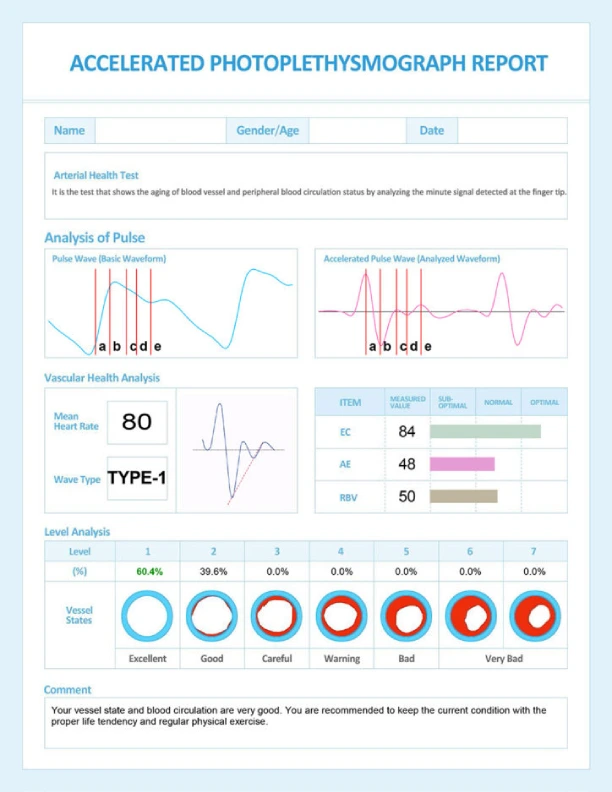
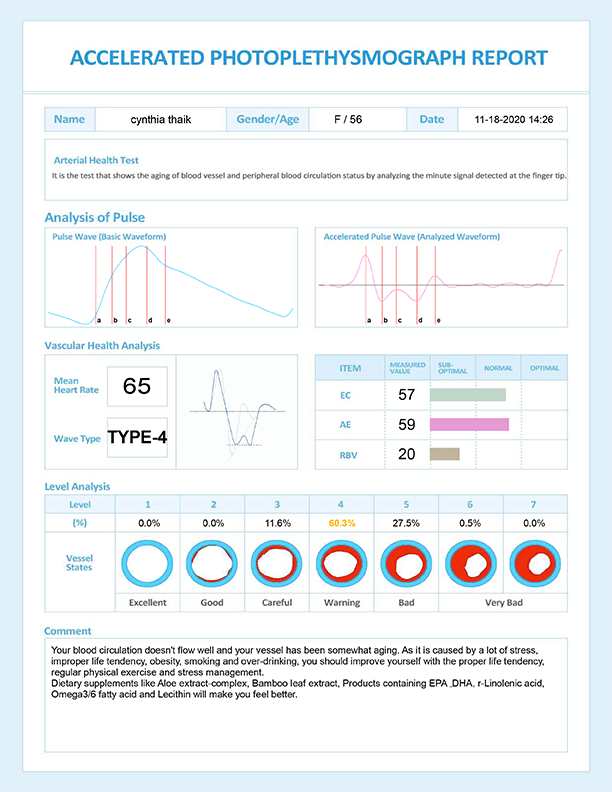
Arterial Health Score A type 1-7 scoring system provides accurate assessment of arterial hardening. The final report can also indicate early congestive heart failure or heart weakening. This test provides early detection of arterial hardening long before the patient becomes symptomatic. This analysis is crucial for individuals with diabetes and for patients with high blood pressure or elevated cholesterol. Analysis of Pulse Wave shows the arterial pulse wave as the heart moves through systolic and diastolic phases. In addition, the report displays Mean Heart Rate and categorizes arterial “wave type” into seven distinct categories, ranging from 1 for a healthy heart to 7 for the poorest heart and vascular condition. Based on the accelerated pulse wave, this classification helps clarify vascular performance. As a result, this cardiovascular screening provides clinicians with actionable insights into arterial stiffness, blood circulation, and autonomic nervous system balance.
The report analysis:

Eccentric Constriction
(EC):
Reflects the force of vessel constriction originating from the left ventricle.

Arterial Elasticity
(AE):
Evaluates blood circulation, vascular elasticity, and vessel resistance, identifying early signs of cardiovascular conditions such as atherosclerosis.

Remaining Blood Volume (RBV):
Depicts the residual blood within vessels post-systolic heart contraction. Healthy blood vessels typically exhibit minimal remaining blood volume.
The Max Pulse Test generates two reports as part of comprehensive cardiovascular screening. One report focuses on arterial stiffness. The second report evaluates overall stress levels. Together, these reports support early detection and long-term heart health monitoring. Max Pulse screening is fast and completely non-invasive.
Max Pulse Cardiovascular Screening: Assessing Autonomic Balance and Stress Levels
This cardiovascular screening offers a detailed assessment of autonomic nervous system activity to support long-term cardiovascular health. It evaluates how the body responds to both physical and mental stress while also examining stress resistance and overall blood circulation efficiency. Heart Rate Variability measures the fluctuation in heart rate using pulse wave data, helping reveal how the cardiovascular system adapts to daily demands and environmental pressures. These responses reflect the balance between the sympathetic and parasympathetic nervous systems, which play a vital role in recovery, resilience, and regulation. Subtle changes in these patterns may indicate early strain or imbalance before symptoms appear. By identifying these signals early, clinicians can better understand individual stress responses and develop more personalized, proactive care strategies.
Meet Dr. Cynthia Thaik, MD - Functional & Integrative Cardiologist
Dr. Cynthia Thaik is a board-certified cardiologist who integrates functional medicine into her concierge practice with a specialized focus on cardiovascular and neurovascular optimization.
She devotes one week per month exclusively to functional medicine consultations via telehealth, allowing for deep, unrushed care. During this time, Dr. Thaik works closely with patients seeking transformation, root-cause healing, and individualized strategies grounded in integrative science.
Her approach combines:
- Precision diagnostics
- Advanced cardiovascular expertise
- Compassionate, heart-centered listening
- Extensive patient education
“Cardiovascular consultations and diagnostic services are covered by insurance. Functional medicine services are offered exclusively as concierge, self-pay services”
Schedule Your Telehealth Consultation with Dr. Cynthia
If you’re living with atrial fibrillation and want to explore natural treatment options, Dr. Cynthia is here to help. She provides telehealth consultations to guide you through personalized care plans, addressing lifestyle changes, supplement use, and stress management techniques tailored to your unique health needs.
Dr. Cynthia Thaik will perform a thorough cardiovascular assessment, looking at cardiac function, ruling out structural damage, checking paroxysmal atrial fibrillation symptoms, assessing the adverse effects of hypertension and dietary toxicity (alcohol, caffeine, excessive inflammatory foods), checking for vascular inflammation and endothelial dysfunction, and exploring the impact of stress on arterial tone and the autonomic nervous system regulation of the cardiovascular system.
The patient will have an option to receive individual coaching from a mindfulness instructor. Together, this integrative team approach to Afib will provide the patient with the best opportunity to address the root causes underlying the atrial fibrillation and hopefully restore normal sinus rhythm. As with all health conditions, our goal is to help Afib patients transition from symptoms and disease care to optimal health and wellness – true preventive cardiology.
If you have been diagnosed with Atrial Fibrillation and are looking for natural treatments, Schedule a virtual visit or call for Telehealth Appointment at (818) 842 1410
Frequently Asked Questions
Regular palpitations can be a sign of atrial fibrillation. While this condition can continue for years without harm, a consistent increase in heart rate can cause heart enlargement. This is a hazard which can result in heart failure. Atrial fibrillation also comes with an increased risk of stroke from blood clots that can form as a result.
Without a solid understanding of the causes, it can be hard to definitively put a stop to heart palpitations. However, the treatments mentioned above: reducing stress and intake of stimulants, alcohol, and nicotine, exercising more, and eating a balanced diet, are all good steps forward. If your cardiologist determines that you have a more serious heart condition that may be life-threatening, it will require treatment. There are heart medications which can prevent more serious heart rhythm disorders. However, because of their significant side effects, they are not prescribed lightly. Consequences of misuse can lead to heart attacks, or even sudden death.
Some people experience heart palpitations after eating. While those palpitations may be attributable to an underlying medical condition, it is also possible that the food or beverage that was just consumed is responsible. Sugar can have this effect, particularly on hypoglycemic people. Alcohol is another common influence, particularly among those who have paroxysmal atrial fibrillation (PAF). Foods rich in tyramine or theobromine, such as cheese, red wine, bananas, and especially chocolate (which has both), can increase heart rate and may cause atrial fibrillation.
Actually, no. A more likely cause of heart palpitations is in fact low blood pressure. It is true that medication for high blood pressure can have a side effect of causing palpitations, which may be what is happening when someone with high blood pressure experiences palpitations.