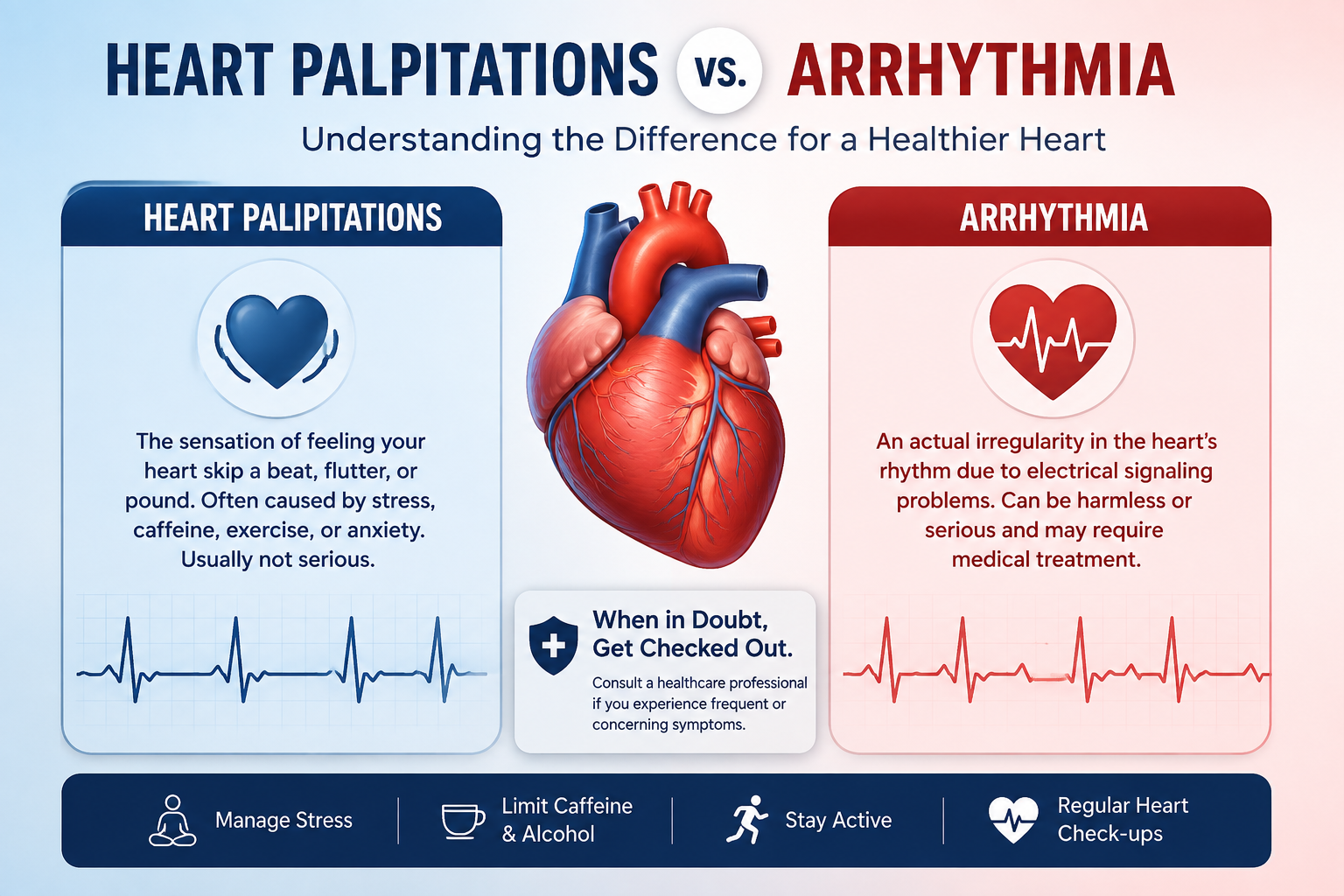

Have you ever felt your heart racing, fluttering, skipping a beat, or pounding unexpectedly? These sensations are often described as heart palpitations, and while they can be alarming, they do not always indicate a serious heart problem. In some cases, however, palpitations may be a symptom of an arrhythmia, which is an abnormal heart rhythm.
Understanding the difference between heart palpitations and arrhythmia can help you recognize when symptoms are harmless and when it is time to seek medical attention. In this guide, we’ll explain the causes, symptoms, diagnosis, and treatment options for both conditions.
Also Read – How to Recognize Woman High Cholesterol Symptoms
What Are Heart Palpitations?
Heart palpitations are sensations that make you unusually aware of your heartbeat. You may feel like your heart is:
- Racing
- Fluttering
- Skipping beats
- Pounding harder than usual
- Beating irregularly
Palpitations can occur while exercising, resting, or even during sleep. They are often temporary and may not be linked to a heart condition.
Common Causes of Heart Palpitations
Several everyday factors can trigger heart palpitations, including:
- Stress and anxiety
- Excess caffeine consumption
- Nicotine use
- Alcohol intake
- Lack of sleep
- Dehydration
- Hormonal changes during pregnancy or menopause
- Certain medications, including decongestants and asthma inhalers
In many cases, palpitations resolve once the trigger is identified and addressed.
Also Read – What Are the Best Over-the-Counter Medications for Chest Pain Relief?
What Is an Arrhythmia?
An arrhythmia is a medical condition that affects the heart’s electrical system, causing the heart to beat too fast, too slow, or irregularly.
Unlike simple palpitations, arrhythmias involve an actual disturbance in the heart’s rhythm and may require medical evaluation and treatment.
Types of Arrhythmias
Atrial Fibrillation (AFib)
One of the most common arrhythmias, AFib causes rapid and irregular heartbeats and increases the risk of stroke.
Supraventricular Tachycardia (SVT)
A fast heart rhythm that originates above the heart’s ventricles.
Bradycardia
A heart rate that is slower than normal, typically fewer than 60 beats per minute.
Ventricular Tachycardia
A potentially serious condition where the heart beats rapidly from the ventricles.
Premature Heartbeats
Extra heartbeats that can feel like skipped beats or fluttering sensations.
Heart Palpitations vs. Arrhythmia: Key Differences
Heart Palpitations
- A sensation that your heart is racing, fluttering, pounding, or skipping beats.
- Commonly triggered by stress, anxiety, caffeine, hormonal changes, dehydration, or lack of sleep.
- Usually temporary and often resolves once the trigger is removed.
- Generally harmless in healthy individuals.
- Often identified based on symptoms and medical history.
- Treatment typically focuses on lifestyle changes, stress management, hydration, and avoiding known triggers.
Arrhythmia
- An actual abnormality in the heart’s electrical rhythm.
- Caused by disruptions in the heart’s electrical signaling system.
- Can be persistent, recurring, or progressive over time.
- May range from mild to life-threatening, depending on the type.
- Requires medical evaluation and diagnostic testing such as an ECG, Holter monitor, or echocardiogram.
- Treatment may include medications, catheter ablation, pacemaker implantation, implantable cardioverter-defibrillators (ICDs), or ongoing cardiac monitoring.
Can Heart Palpitations Be a Sign of Arrhythmia?
Yes. While many palpitations are harmless, they can sometimes indicate an underlying arrhythmia.
You should consult a cardiologist if palpitations occur with:
- Chest pain
- Shortness of breath
- Dizziness
- Fainting
- Persistent rapid heartbeat
- Family history of heart disease
- Symptoms that worsen over time
A proper cardiac evaluation can determine whether the palpitations are related to an arrhythmia or another health condition.
Also Read – Coping With Flare-Ups: Managing POTS Symptoms on Tough Days
How Cardiologists Diagnose Heart Palpitations and Arrhythmias
A cardiologist may recommend several tests to identify the cause of symptoms.
Electrocardiogram (ECG)
Records the electrical activity of the heart and can detect abnormal rhythms.
Holter Monitor
A portable device worn for 24 to 48 hours to monitor heart activity continuously.
Event Monitor
Used for longer-term monitoring when symptoms occur intermittently.
Echocardiogram
Uses ultrasound technology to evaluate heart structure and function.
Blood Tests
Can identify thyroid disorders, electrolyte imbalances, or other conditions contributing to symptoms.
Treatment Options for Heart Palpitations
If palpitations are not caused by a heart condition, treatment often focuses on lifestyle changes.
Reduce Stimulants
Limit caffeine, energy drinks, alcohol, and nicotine.
Manage Stress
Practice relaxation techniques such as meditation, yoga, and deep breathing exercises.
Stay Hydrated
Dehydration can contribute to palpitations and irregular heartbeats.
Improve Sleep Habits
Poor sleep quality can increase the likelihood of palpitations.
Treatment Options for Arrhythmia
Treatment depends on the type and severity of the arrhythmia.
Common treatments include:
- Medications to control heart rate and rhythm
- Blood thinners for stroke prevention
- Catheter ablation procedures
- Pacemaker implantation
- Implantable cardioverter-defibrillator (ICD) therapy
- Lifestyle modifications
A personalized treatment plan can help manage symptoms and reduce complications.
When Should You See a Cardiologist?
Seek medical attention if you experience:
- Frequent or worsening palpitations
- Irregular heartbeat lasting several minutes
- Chest discomfort
- Shortness of breath
- Lightheadedness or fainting
- A history of heart disease
Early diagnosis is essential for preventing complications and maintaining long-term heart health.