We have moved to
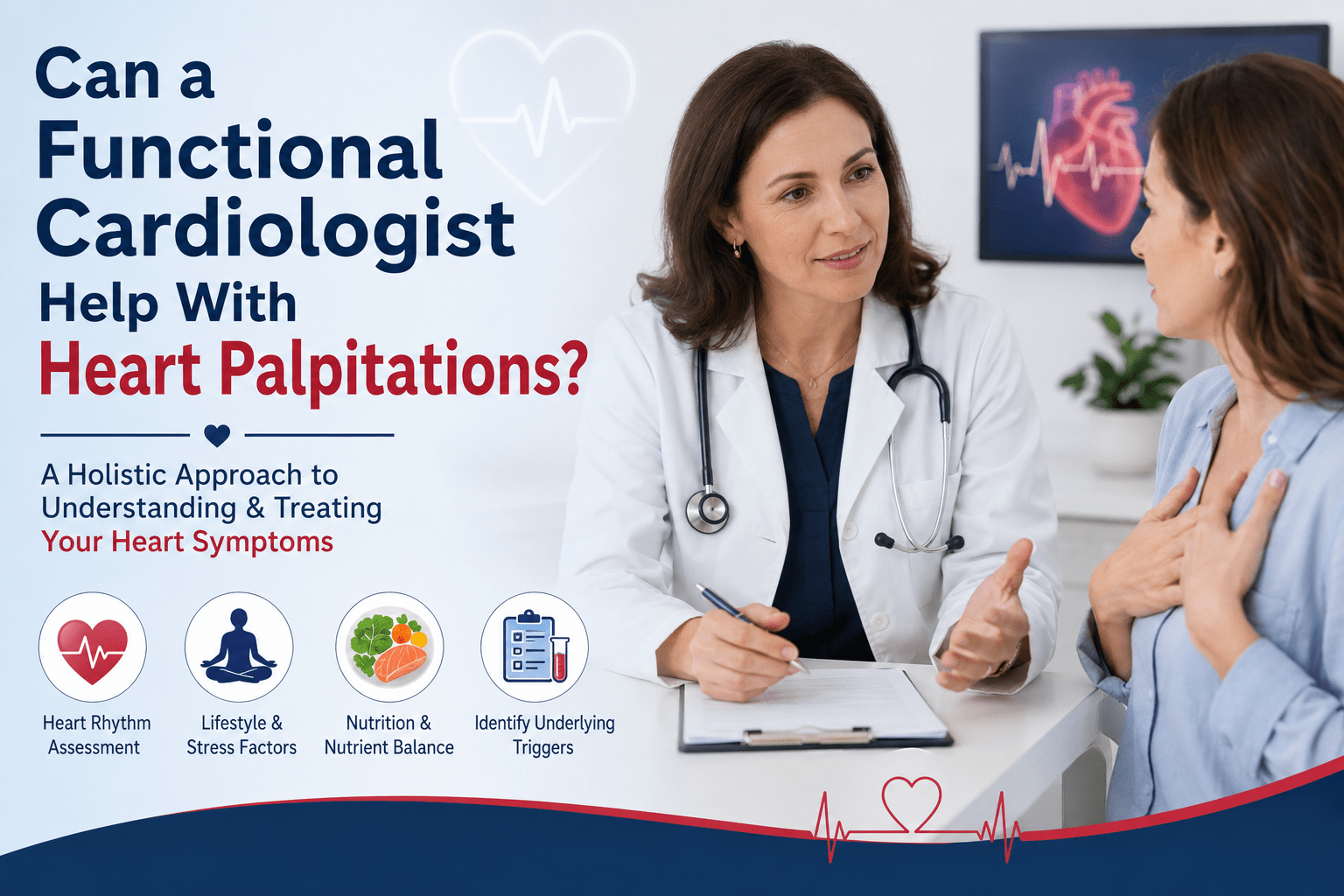

Heart palpitations can be unsettling. You may feel like your heart is racing, pounding, fluttering, skipping a beat, or beating unusually hard. While occasional palpitations are often harmless, frequent or persistent episodes may deserve a closer look.
A functional cardiologist for heart palpitations takes a broader approach than simply looking at the heart rhythm. In addition to evaluating cardiovascular health, a functional cardiologist may consider factors such as stress, sleep, nutrition, hydration, medications, hormones, metabolic health, and lifestyle when looking for possible contributors to symptoms.
What Are Heart Palpitations?
Heart palpitations are sensations that make you more aware of your heartbeat. They can occur while resting, exercising, standing up, after eating, or during periods of stress.
People describe palpitations in different ways, including:
- A racing heartbeat
- Fluttering in the chest
- A pounding sensation
- A feeling that the heart has skipped a beat
- Extra or irregular beats
- A heartbeat that suddenly becomes fast
Palpitations can last for a few seconds or several minutes. Some people experience them occasionally, while others notice them repeatedly.
The sensation itself does not always indicate a serious heart problem. However, understanding why the palpitations are occurring is important, particularly when they are new, frequent, or accompanied by other symptoms.
How Can a Functional Cardiologist Help With Heart Palpitations?
A functional cardiologist combines conventional cardiovascular evaluation with a more comprehensive assessment of potential contributing factors.
Rather than focusing only on the symptom, the goal is to understand the bigger picture of your cardiovascular health.
1. Evaluating Your Heart Rhythm
A functional cardiologist may recommend appropriate cardiovascular testing based on your symptoms and medical history. Depending on your situation, this could include an electrocardiogram (ECG), ambulatory heart monitoring, echocardiography, blood pressure assessment, or other testing.
Heart monitoring can be particularly useful when palpitations come and go because an episode may not occur during a brief office ECG.
2. Looking for Possible Triggers
Palpitations can have many possible triggers. A comprehensive evaluation may consider:
- Caffeine and other stimulants
- Alcohol
- Dehydration
- Poor sleep
- Emotional stress
- Intense exercise
- Certain medications
- Nutritional deficiencies
- Hormonal changes
- Thyroid abnormalities
- Blood sugar fluctuations
- Electrolyte imbalances
Identifying patterns can help your cardiologist determine whether lifestyle or underlying health factors could be contributing to your symptoms.
3. Considering Autonomic Function
Some people experience a rapid heartbeat when standing, dizziness, lightheadedness, fatigue, or exercise intolerance. These symptoms can sometimes be associated with problems involving the autonomic nervous system, including conditions such as postural orthostatic tachycardia syndrome (POTS).
If your palpitations occur primarily after changing position, a cardiovascular evaluation may help determine whether further assessment of heart rate and blood pressure responses is appropriate.
4. Reviewing Lifestyle and Metabolic Health
Heart health is influenced by more than the cardiovascular system itself. Nutrition, physical activity, sleep, stress management, metabolic health, and other lifestyle factors can all play a role.
A functional cardiology approach may look at these areas alongside traditional cardiovascular risk factors. This can help create a personalized plan rather than relying on a one-size-fits-all strategy.
When Should You See a Cardiologist for Palpitations?
Not every palpitation requires urgent medical attention, but recurring symptoms should not automatically be dismissed.
Consider discussing palpitations with a cardiologist if they:
- Occur frequently or are becoming more noticeable
- Last longer than a few moments
- Occur during physical activity
- Are associated with dizziness or unusual fatigue
- Occur with shortness of breath
- Wake you from sleep
- Are accompanied by chest discomfort
- Begin suddenly and repeatedly without an obvious trigger
- Occur if you have a personal or family history of heart disease or abnormal heart rhythms
Seek emergency medical care for palpitations accompanied by severe chest pain, significant difficulty breathing, fainting, or other severe or rapidly worsening symptoms.
Can Lifestyle Changes Reduce Heart Palpitations?
Sometimes. The appropriate changes depend on what is contributing to the symptoms.
Keeping a symptom diary can be useful. Record when the palpitations happen, what you were doing, what you had eaten or consumed, your sleep, stress levels, hydration, and any other symptoms you noticed.
Depending on your individual situation, your healthcare provider may discuss:
- Maintaining adequate hydration
- Getting consistent, quality sleep
- Limiting excessive caffeine or stimulant intake
- Managing chronic stress
- Eating a balanced diet
- Exercising appropriately
- Reviewing medications and supplements with your healthcare provider
- Monitoring blood pressure and heart rate when recommended
Lifestyle changes should complement not replace appropriate medical evaluation.
A Personalized Approach to Heart Health
One of the potential benefits of functional cardiology is its emphasis on individualized care. Two people may both report heart palpitations but have very different underlying factors.
For one person, palpitations may be related to an abnormal heart rhythm. For another, dehydration, stress, hormonal changes, medication effects, or an autonomic condition may be contributing.
That is why a thorough evaluation matters.
A functional cardiologist for heart palpitations can help connect symptoms with cardiovascular, metabolic, lifestyle, and other relevant factors while ensuring that potentially serious heart conditions are appropriately evaluated.
Frequently Asked Questions
Can a functional cardiologist diagnose heart palpitations?
Yes. A functional cardiologist can evaluate palpitations using standard cardiovascular assessment and appropriate diagnostic testing. The evaluation may also consider lifestyle and other factors that could contribute to symptoms.
Are heart palpitations always a sign of heart disease?
No. Palpitations can occur for many reasons, including stress, caffeine, dehydration, medications, hormonal changes, and abnormal heart rhythms. However, recurrent or concerning symptoms should be evaluated by a healthcare professional.
Can stress cause heart palpitations?
Yes. Stress and anxiety can activate the body’s sympathetic nervous system and make your heartbeat feel faster or stronger. However, it is important not to assume that stress is the cause without considering other possible explanations.
What tests may be used to investigate palpitations?
Depending on your symptoms, a healthcare provider may use an ECG, wearable or ambulatory heart monitor, echocardiogram, blood pressure measurements, and laboratory testing. The specific evaluation depends on your medical history and symptoms.
Should I see a cardiologist if my heart keeps racing when I stand?
If your heart rate repeatedly increases when standing, particularly when accompanied by dizziness, lightheadedness, fatigue, or exercise intolerance, discuss your symptoms with a healthcare professional. Further evaluation may be appropriate.
Take Your Heart Palpitations Seriously
Heart palpitations are common, but recurring symptoms deserve attention. A functional cardiology approach can look beyond the sensation itself to evaluate heart rhythm, cardiovascular risk factors, lifestyle, metabolic health, and other potential contributors.
If you are experiencing persistent or unexplained palpitations, a personalized cardiovascular evaluation can help determine what may be happening and what steps may support your long-term heart health.