We have moved to
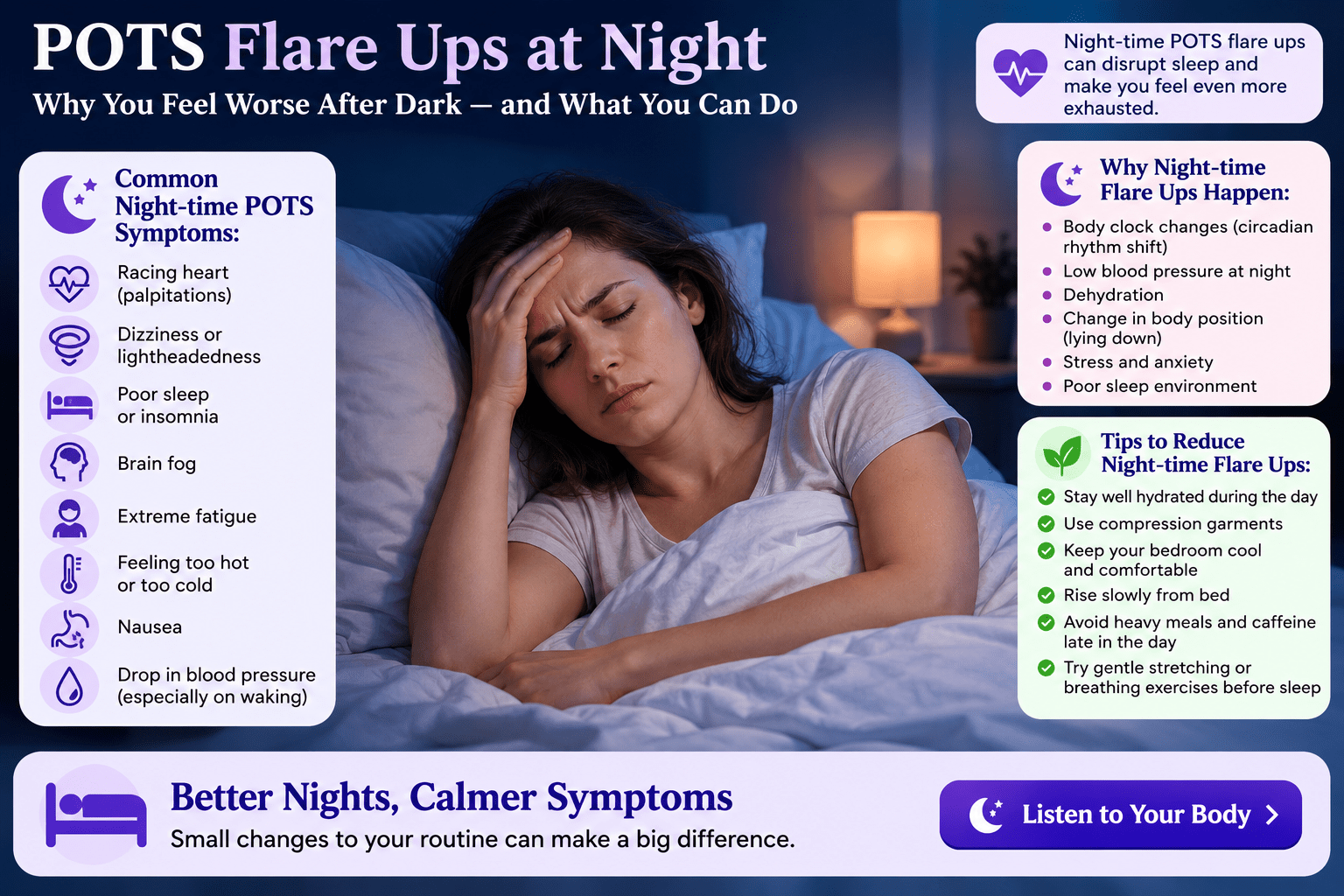

If you live with Postural Orthostatic Tachycardia Syndrome (POTS), symptoms can sometimes become more noticeable at night. A nighttime POTS flare may involve a racing heartbeat, dizziness, weakness, sweating, difficulty sleeping, shakiness, or feeling unusually unwell when trying to rest.
Understanding what may trigger nighttime symptoms and how to manage them can help you recognize patterns and know when it’s appropriate to contact your healthcare provider.
Because POTS affects people differently, treatment should be individualized. Strategies that help one person may not be appropriate for another, particularly if you have another medical condition or take medications that affect blood pressure or heart rate.
Also Read – Cardiovascular Genomics
What Is a POTS Flare Up?
A POTS flare up refers to a period when POTS symptoms become more intense or occur more frequently than usual.
POTS affects the autonomic nervous system and can cause an abnormal increase in heart rate when moving from lying down or sitting to standing. Symptoms can include:
- Rapid or pounding heartbeat
- Lightheadedness
- Dizziness
- Fatigue
- Brain fog
- Weakness
- Trembling
- Sweating
- Exercise intolerance
- Nausea
- Headaches
Although POTS symptoms are often associated with standing or prolonged upright activity, some people may notice symptoms or increased discomfort at night.
Also Read – Telemedicine Cardiologist
Why Do POTS Flare Ups Happen at Night?
Nighttime symptoms can have several possible triggers. Identifying your personal triggers can help you and your healthcare provider develop a more effective management plan.
1. Dehydration
Not drinking enough fluids throughout the day can contribute to reduced blood volume, which may worsen orthostatic symptoms in some people with POTS.
Fluid needs vary, so follow the hydration recommendations provided by your healthcare professional.
2. Heat
A warm bedroom, hot shower or excessive heat can cause blood vessels to widen and may make POTS symptoms worse for some people.
Keeping your sleeping environment comfortably cool may help if heat is one of your personal triggers.
3. Large or Heavy Meals
Some people with POTS notice increased symptoms after eating, particularly after large meals.
Digestion naturally changes blood flow, and this may contribute to symptoms in some people with autonomic dysfunction.
If you regularly experience nighttime symptoms after dinner, discuss your eating patterns with your healthcare provider.
4. Physical or Emotional Stress
A physically demanding day, emotional stress or inadequate recovery can sometimes coincide with worsening symptoms.
Stress can affect heart rate, sleep and the autonomic nervous system, potentially making symptoms feel more noticeable.
5. Poor Sleep
Sleep disruption can make fatigue, brain fog and other symptoms more difficult to manage the following day.
If nighttime POTS symptoms repeatedly interfere with your sleep, talk with your healthcare provider rather than assuming poor sleep is simply part of the condition.
6. Hormonal Changes
Some people notice changes in POTS symptoms around hormonal fluctuations, including the menstrual cycle.
If you notice a consistent pattern between your symptoms and your menstrual cycle, keeping a symptom diary can help your healthcare provider identify potential patterns.
What Does a POTS Flare Up at Night Feel Like?
Everyone experiences POTS differently, but a nighttime flare may involve:
- A racing or pounding heartbeat
- Feeling lightheaded
- Shakiness
- Weakness
- Sweating
- Nausea
- Difficulty falling asleep
- Feeling unusually restless
- Brain fog or difficulty concentrating
- Feeling worse after getting up during the night
Symptoms that occur while lying down are not necessarily caused by POTS. Other conditions can cause similar symptoms, so new, severe or unusual symptoms should be medically evaluated.
POTS Flare Up Treatment at Night
There isn’t one treatment that works for every POTS patient. Management typically focuses on controlling symptoms and addressing individual triggers.
Follow Your Personalized Treatment Plan
If you’ve been diagnosed with POTS, follow the treatment plan provided by your healthcare professional.
Depending on your individual situation, POTS management may include lifestyle strategies, physical conditioning, compression garments, medications, fluid management and other approaches.
Stay Hydrated According to Your Care Plan
Adequate hydration is often an important component of POTS management.
However, fluid and salt recommendations should be individualized. People with certain heart, kidney or blood-pressure conditions may need different recommendations.
Don’t significantly increase your salt or fluid intake without discussing it with your healthcare provider.
Change Positions Slowly
If you need to get out of bed during a flare, move slowly.
For example:
- Sit up gradually.
- Pause before standing.
- Stand slowly.
- Hold onto something stable if you feel lightheaded.
This can reduce the risk of falling when symptoms are strong.
Keep Your Sleeping Environment Comfortable
If heat makes your symptoms worse, maintaining a comfortably cool bedroom may help.
Avoid excessively hot showers or baths immediately before bed if you know heat triggers your symptoms.
Use Prescribed Medications as Directed
Some people with POTS are prescribed medication to help manage heart rate, blood pressure or other symptoms.
Take medications exactly as prescribed. Don’t change the dose or timing because of a nighttime flare unless your healthcare provider has instructed you to do so.
Can a POTS Flare Up Be Worse at Night?
Yes, some people report that POTS symptoms become more noticeable during the evening or interfere with sleep.
However, nighttime symptoms shouldn’t automatically be attributed to POTS.
Heart rhythm problems, sleep disorders, anxiety, medication effects, dehydration and other medical conditions can produce symptoms that overlap with POTS.
If your nighttime symptoms are new, changing or significantly worse than usual, talk with your healthcare provider.
How Can You Prevent POTS Flare Ups at Night?
Prevention starts with identifying your individual triggers.
Consider keeping a simple symptom diary that records:
- What you ate
- Fluid intake
- Physical activity
- Stress levels
- Sleep quality
- Menstrual cycle timing
- Medications
- When symptoms started
- What symptoms occurred
- How long the episode lasted
This information can help your healthcare provider identify patterns and adjust your treatment plan when appropriate.
When Should You Seek Medical Help for a POTS Flare Up?
POTS symptoms can overlap with symptoms of other medical conditions. Seek urgent medical attention for severe or unusual symptoms, particularly:
- Chest pain or pressure
- Severe difficulty breathing
- Fainting with injury
- New severe or persistent heart palpitations
- Confusion
- Severe weakness
- Symptoms that feel substantially different from your usual POTS episodes
If you are unsure whether a symptom is part of your usual POTS pattern, it’s safer to contact a healthcare professional for guidance.
When Should You Talk to Your POTS Specialist?
Make an appointment with your healthcare provider if nighttime episodes:
- Are becoming more frequent
- Are lasting longer
- Are interfering with sleep
- Are affecting your daily activities
- Are occurring despite following your treatment plan
- Feel different from your usual symptoms
Your provider may review your symptoms, medications, hydration, blood pressure, heart rate and other factors to determine whether your treatment plan needs to be adjusted.
Managing POTS Flare Ups With Personalized Care
Living with POTS can be challenging, particularly when symptoms interfere with sleep or daily activities. The goal of treatment is not simply to manage one nighttime episode but to understand your symptoms and develop a sustainable management strategy.
A healthcare professional familiar with autonomic disorders can help determine whether your symptoms are consistent with POTS and whether other conditions should be considered.
If you’re experiencing frequent POTS flare ups at night, speak with your healthcare provider about your symptoms rather than trying to manage persistent or worsening episodes on your own.
Frequently Asked Questions
Why does my POTS flare up at night?
Nighttime POTS symptoms may be associated with factors such as dehydration, heat, stress, poor sleep, meals, hormonal changes or individual triggers. However, nighttime symptoms can have other causes, so persistent or new symptoms should be evaluated.
What should I do during a POTS flare up at night?
Follow your personalized POTS management plan. If you need to get out of bed, change positions slowly and take precautions to prevent falls. Use prescribed medications only as directed by your healthcare provider.
Can dehydration cause a POTS flare up at night?
Dehydration can contribute to worsening orthostatic symptoms in some people with POTS. Follow your healthcare provider’s recommendations for daily fluid intake.
Should I increase salt during a POTS flare?
Some people with POTS are advised to increase sodium intake, but this isn’t appropriate for everyone. Do not significantly increase salt intake without discussing it with your healthcare provider, especially if you have conditions affected by sodium or blood pressure.
Can eating late cause POTS symptoms?
Some people notice increased symptoms after meals, particularly larger meals. If you consistently experience symptoms after eating at night, discuss the pattern with your healthcare provider.
Can POTS cause a racing heart while lying down?
POTS is primarily characterized by an excessive increase in heart rate when upright. If you regularly experience a racing heartbeat while lying down, particularly if this is new or severe, discuss it with your healthcare provider to determine whether another cause should be evaluated.