We have moved to
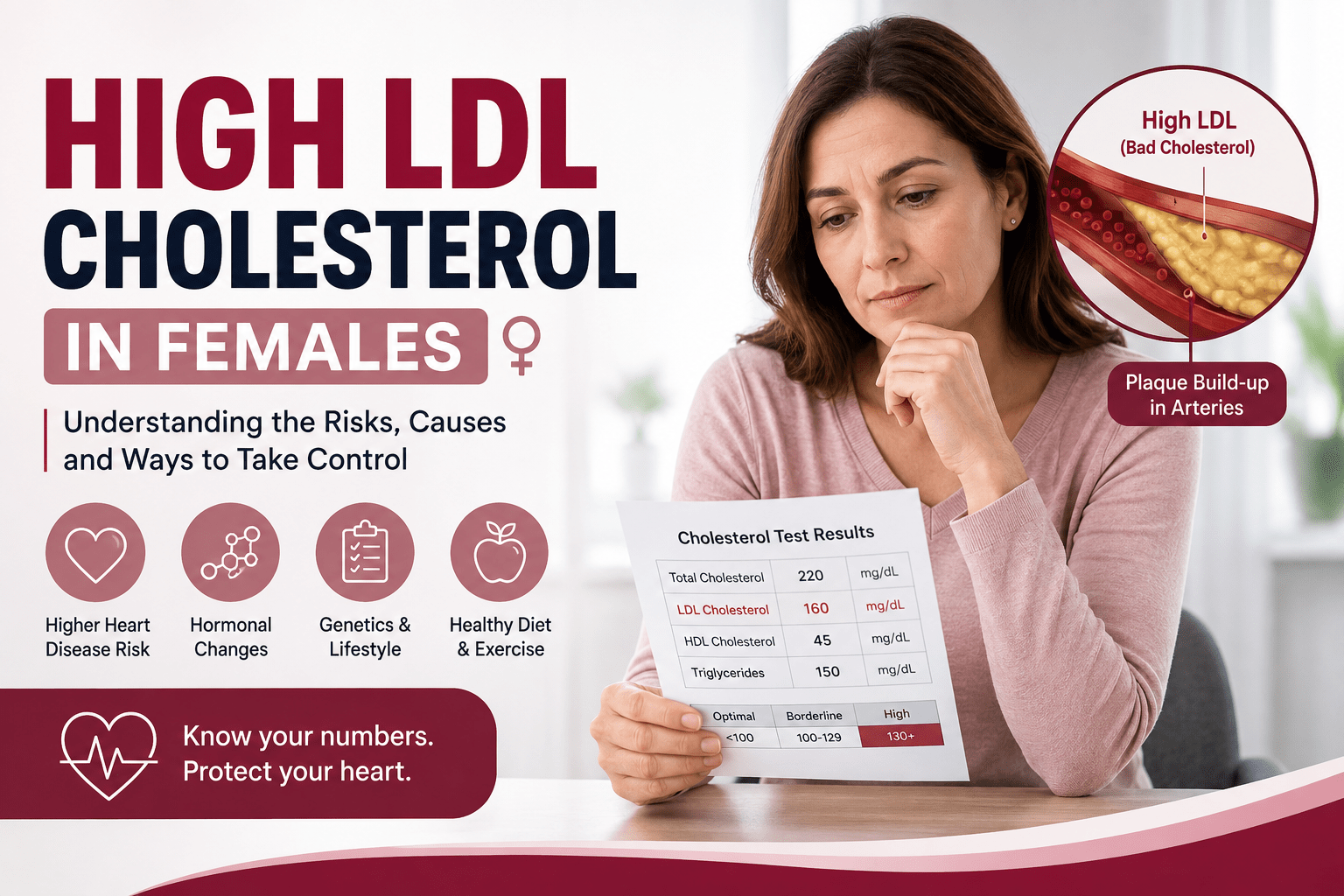

High LDL cholesterol is a common health concern, but many women don’t realize they have it because high cholesterol often does not cause noticeable symptoms. That’s why understanding your cholesterol levels and getting appropriate testing can be an important part of protecting your long-term heart health.
If you’re concerned about high LDL cholesterol in females, understanding what LDL means, what can cause it to rise, and when to speak with a healthcare professional can help you make informed decisions about your health.
What Is LDL Cholesterol?
LDL stands for low-density lipoprotein cholesterol. It is often called “bad cholesterol” because elevated LDL levels can contribute to plaque buildup inside the arteries.
Over time, this buildup can increase the risk of cardiovascular problems, including heart attack and stroke.
However, cholesterol isn’t inherently bad. Your body needs cholesterol for important functions, including making hormones and building healthy cells. The concern is having too much LDL cholesterol in the bloodstream.
Also Read – Cardiovascular Genomics
What Are the Symptoms of High LDL Cholesterol in Females?
One of the most important things to understand about high LDL cholesterol in women is that it usually doesn’t cause symptoms.
You generally cannot tell that your LDL cholesterol is high based on how you feel.
This means symptoms such as fatigue, headaches or dizziness should not automatically be attributed to high cholesterol. The most reliable way to determine your cholesterol levels is through an appropriate blood test called a lipid panel.
Why Can High Cholesterol Be Difficult to Detect?
Because high cholesterol may not produce obvious warning signs, a woman can feel completely healthy while having elevated LDL levels.
This is one reason regular preventive healthcare and appropriate cholesterol screening are important, particularly for women with risk factors for cardiovascular disease.
What Causes High LDL Cholesterol in Females?
Several factors can contribute to elevated LDL cholesterol.
Genetics
Some women inherit genetic conditions that cause unusually high cholesterol levels. Familial hypercholesterolemia (FH) is one example.
If close family members have very high cholesterol or experienced heart disease at a young age, talk with your healthcare provider about whether additional evaluation may be appropriate.
Diet
A diet high in saturated fats and trans fats can contribute to increased LDL cholesterol.
Foods that may contribute include certain:
- Fatty meats
- Full-fat dairy products
- Fried foods
- Processed foods
- Commercial baked goods
A heart-healthy eating pattern generally emphasizes vegetables, fruits, whole grains, legumes, nuts, seeds, fish and other nutrient-dense foods.
Physical Inactivity
Regular physical activity can support cardiovascular health and may help improve cholesterol levels.
Your healthcare provider can help you determine an appropriate activity level based on your health and fitness.
Excess Weight
Having overweight or obesity can be associated with an unfavorable cholesterol profile.
Even modest lifestyle changes may contribute to better overall cardiovascular health.
Smoking
Smoking damages blood vessels and contributes to cardiovascular disease risk. It can also negatively affect HDL cholesterol, commonly known as “good cholesterol.”
If you smoke, talk with a healthcare professional about evidence-based ways to quit.
Certain Medical Conditions
Some health conditions can contribute to abnormal cholesterol levels, including:
- Diabetes
- Kidney disease
- Thyroid disorders
- Certain liver conditions
Certain medications can also affect cholesterol levels.
Also Read – Telemedicine Cardiologist
Why Is High LDL Cholesterol a Concern for Women?
Persistently elevated LDL cholesterol can contribute to atherosclerosis, a process in which cholesterol and other substances accumulate within artery walls.
Over time, this can narrow or damage arteries and increase cardiovascular risk.
For women, understanding cholesterol is particularly important because cardiovascular disease remains a major health concern, and risk factors can change throughout different stages of life.
High LDL Cholesterol and Menopause
Hormonal changes during menopause can affect a woman’s cardiovascular risk profile.
LDL cholesterol may increase around menopause, while other changes in body composition, blood pressure and metabolism can also influence overall heart-health risk.
If you’re approaching or going through menopause, ask your healthcare provider whether your cholesterol and other cardiovascular risk factors should be reassessed.
What LDL Cholesterol Level Is Considered High?
There isn’t one LDL number that determines treatment for every woman.
Healthcare professionals consider LDL levels alongside other factors, such as:
- Age
- Blood pressure
- Diabetes
- Smoking status
- Family history
- Previous cardiovascular disease
- Other cholesterol measurements
- Overall cardiovascular risk
Your healthcare provider can interpret your lipid panel in the context of your individual health rather than looking at one number alone.
How Is High LDL Cholesterol Diagnosed?
High LDL cholesterol is typically identified through a lipid panel, which may measure:
- LDL cholesterol
- HDL cholesterol
- Total cholesterol
- Triglycerides
Your healthcare provider may recommend cholesterol testing as part of routine preventive care or more frequently if you have cardiovascular risk factors.
Can High LDL Cholesterol Be Lowered?
Yes. Depending on your cholesterol levels and overall cardiovascular risk, your healthcare provider may recommend lifestyle changes, medication, or a combination of both.
Lifestyle Strategies May Include:
Eating a heart-healthy diet:
Focus on vegetables, fruits, whole grains, legumes, nuts, seeds and lean protein sources while limiting saturated and trans fats.
Staying physically active:
Regular exercise can support heart health and improve several cardiovascular risk factors.
Maintaining a healthy weight:
If you have overweight, gradual and sustainable weight management may benefit your cardiovascular health.
Avoiding tobacco:
Quitting smoking is one of the most important steps you can take for your heart and blood vessels.
Taking prescribed medication:
If lifestyle changes aren’t enough or your cardiovascular risk is elevated, your healthcare provider may recommend cholesterol-lowering medication.
Never start, stop or change cholesterol medication without discussing it with your healthcare professional.
High LDL Cholesterol in Women: When Should You See a Doctor?
If you haven’t had your cholesterol checked recently, talk with your healthcare provider about whether testing is appropriate for you.
You should also consider discussing cholesterol screening if you have:
- A family history of high cholesterol
- A family history of early heart disease
- Diabetes
- High blood pressure
- Smoking history
- Overweight or obesity
- Previous abnormal cholesterol results
- Other cardiovascular risk factors
Remember that you don’t need to have symptoms to have high LDL cholesterol.
High LDL Cholesterol in Females and Heart Health
High LDL cholesterol is often a silent risk factor, which means prevention and regular health monitoring are particularly important.
Rather than waiting for symptoms, women can take proactive steps by understanding their cardiovascular risk factors, getting appropriate cholesterol testing and discussing their results with a qualified healthcare professional.
If you’re concerned about your cholesterol, don’t try to interpret a single LDL number on your own. Your overall cardiovascular risk matters.
Frequently Asked Questions
What are the symptoms of high LDL cholesterol in females?
High LDL cholesterol usually does not cause noticeable symptoms. Most people discover they have elevated cholesterol through a blood test rather than physical symptoms.
Can high LDL cholesterol cause fatigue in women?
Fatigue is not a typical symptom of high LDL cholesterol. If you’re experiencing persistent fatigue, speak with a healthcare professional to determine the underlying cause.
Can high cholesterol cause headaches or dizziness?
High cholesterol itself typically does not cause headaches or dizziness. These symptoms can have many possible causes and should be evaluated by a healthcare professional if they persist or are concerning.
What causes high LDL cholesterol in females?
Common contributors include genetics, diet, physical inactivity, excess weight, smoking, certain medical conditions and some medications.
Does menopause increase LDL cholesterol?
Hormonal and metabolic changes associated with menopause can affect cholesterol levels, including LDL cholesterol. Women going through menopause may benefit from discussing their cardiovascular risk factors with their healthcare provider.
How do I know if my LDL cholesterol is high?
The most reliable way to know is through a blood test called a lipid panel. Your healthcare provider can interpret your results based on your overall cardiovascular risk.
Can high LDL cholesterol be reversed naturally?
Lifestyle changes can help lower LDL cholesterol for many people. However, some individuals also need medication depending on their LDL level and overall cardiovascular risk.
Should women over 40 have their cholesterol checked?
Cholesterol screening recommendations depend on individual risk factors and medical history. Women over 40 should discuss appropriate screening with their healthcare provider rather than relying on age alone.
Can young women have high LDL cholesterol?
Yes. Genetics, diet, certain medical conditions and other factors can contribute to elevated LDL cholesterol at a young age.
When should I talk to a healthcare provider about high LDL cholesterol?
Talk with a healthcare professional if you’ve received an abnormal cholesterol result, have a strong family history of high cholesterol or early heart disease, or have other cardiovascular risk factors.