We have moved to
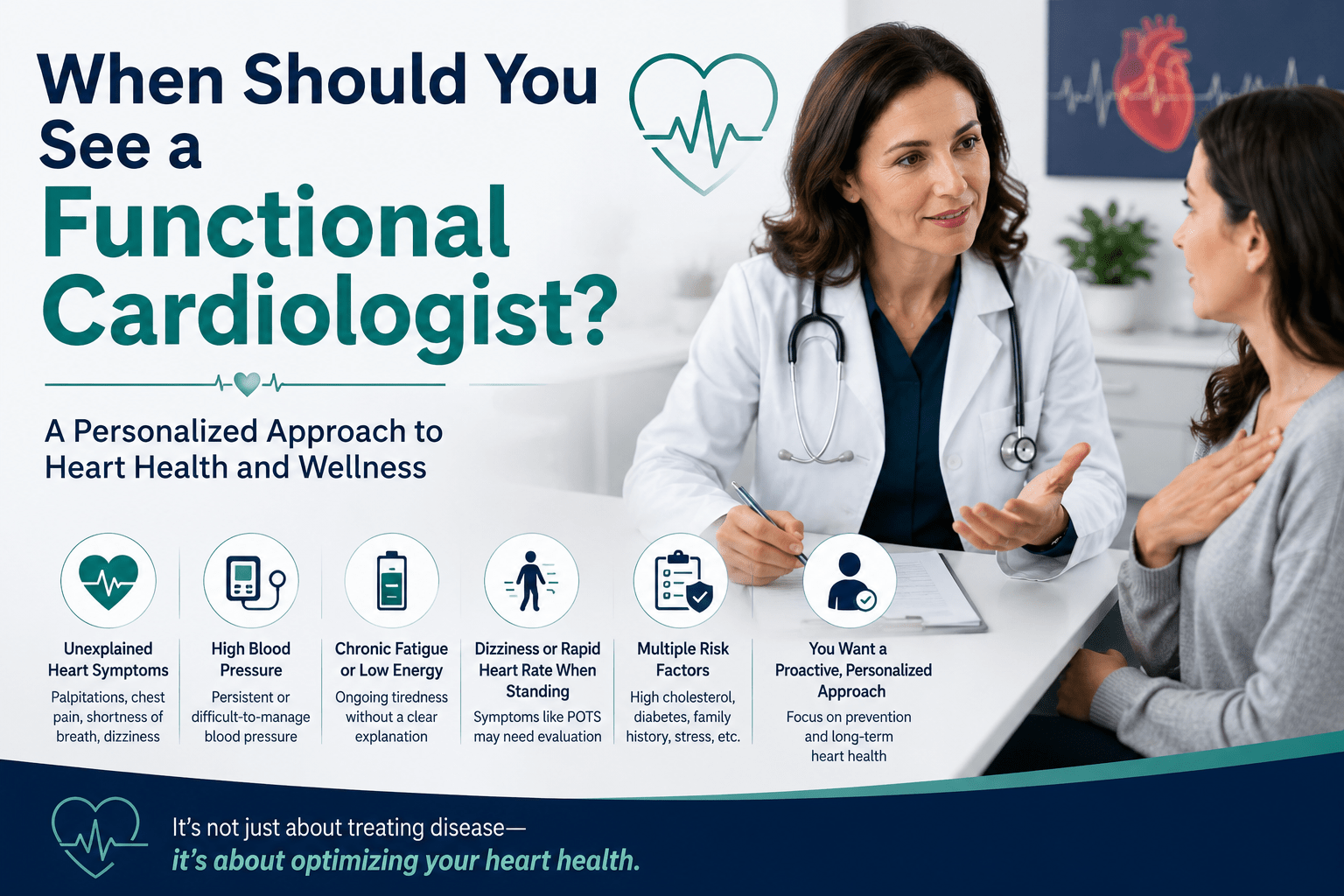

Your heart can sometimes signal that something needs attention long before a serious cardiovascular problem develops. Symptoms such as heart palpitations, unexplained fatigue, high blood pressure, or shortness of breath may have several possible causes. While these symptoms do not always mean you have heart disease, they are worth discussing with a qualified healthcare professional when they persist or interfere with daily life.
So, when should you see a functional cardiologist?
A functional cardiologist combines traditional cardiovascular care with a broader look at factors that may influence heart health. Depending on your individual needs, this may include lifestyle, nutrition, metabolic health, stress, sleep, and other potential contributors to cardiovascular symptoms.
Here are seven signs that a functional cardiology evaluation may be worth considering.
1. You Experience Frequent Heart Palpitations
Heart palpitations can feel like your heart is racing, fluttering, pounding, or skipping beats. Occasional palpitations may be harmless, but recurring or unexplained episodes should not simply be ignored.
A functional cardiologist can evaluate your heart rhythm and consider possible contributors, including:
- Stress and anxiety
- Caffeine or stimulant use
- Dehydration
- Poor sleep
- Medication or supplement effects
- Hormonal changes
- Electrolyte imbalances
- Abnormal heart rhythms
Depending on your symptoms, cardiovascular testing such as an ECG or ambulatory heart monitor may be recommended.
2. Your Blood Pressure Is Consistently High
High blood pressure is one of the most important modifiable cardiovascular risk factors. Because hypertension often produces few noticeable symptoms, many people do not realize their blood pressure is elevated.
If your blood pressure readings remain high despite lifestyle changes or treatment, a comprehensive cardiovascular evaluation can help identify potential contributing factors and assess your overall heart health.
A functional approach may also consider nutrition, physical activity, sleep, stress, weight, metabolic health, medications, and other lifestyle factors alongside standard blood pressure management.
3. You Have Unexplained Fatigue or Reduced Exercise Tolerance
Feeling unusually tired or finding that activities that once felt easy now leave you exhausted can have many possible explanations.
Persistent fatigue may be related to sleep problems, anemia, thyroid issues, medications, stress, metabolic concerns, deconditioning, or cardiovascular conditions.
A functional cardiologist can help determine whether your symptoms warrant further cardiovascular evaluation while considering other factors that may affect how you feel.
4. You Feel Dizzy or Your Heart Races When You Stand
A rapid heartbeat, dizziness, lightheadedness, or weakness after standing can sometimes point toward issues involving heart rate or blood pressure regulation.
Some people with these symptoms may have an autonomic nervous system disorder, such as postural orthostatic tachycardia syndrome (POTS).
If you regularly experience a fast heart rate when standing, especially when accompanied by lightheadedness, fatigue, brain fog, or exercise intolerance, discussing these symptoms with a cardiovascular professional may be appropriate.
A detailed history and appropriate heart rate and blood pressure assessment can help determine whether additional evaluation is needed.
5. You Have Multiple Heart Disease Risk Factors
You do not have to wait for symptoms before paying attention to your cardiovascular health.
Consider a proactive heart health evaluation if you have several risk factors, such as:
- High cholesterol
- High blood pressure
- Diabetes or insulin resistance
- Smoking history
- Excess weight
- Physical inactivity
- Strong family history of cardiovascular disease
- Poor sleep
- Chronic stress
A personalized approach can help identify areas where prevention may make the greatest difference.
6. Standard Testing Is Normal, but You Still Have Symptoms
One of the most frustrating experiences can be having symptoms while routine tests appear normal.
If you continue to experience palpitations, fatigue, dizziness, chest discomfort, or exercise intolerance despite reassuring initial results, it may be reasonable to discuss whether additional evaluation is appropriate.
Functional cardiology does not replace conventional cardiac testing. Instead, it can complement standard care by considering the broader context surrounding your symptoms and overall health.
The right next step depends on your medical history, symptoms, risk factors, and previous test results.
7. You Want a More Personalized Approach to Heart Health
Some people seek functional cardiology not because they have a specific diagnosis, but because they want to take a more proactive approach to cardiovascular wellness.
A functional cardiology visit may explore areas such as:
- Nutrition and dietary patterns
- Physical activity
- Sleep quality
- Stress management
- Metabolic health
- Blood pressure and cholesterol
- Family history
- Lifestyle habits
- Cardiovascular risk factors
The goal is to understand your individual health picture and develop an appropriate plan based on your needs.
What Does a Functional Cardiologist Do?
A functional cardiologist is a cardiovascular specialist who uses conventional cardiology principles while taking a broader view of factors that may influence cardiovascular health.
Depending on the patient’s symptoms and needs, evaluation may include standard cardiovascular testing and a detailed discussion of lifestyle, nutrition, sleep, stress, medications, and metabolic factors.
This does not mean every symptom has a hidden cause or that conventional medical treatment is unnecessary. Rather, the approach aims to combine appropriate medical evaluation with personalized prevention and lifestyle strategies.
When Should You See a Functional Cardiologist vs. Seek Emergency Care?
Functional cardiology can be useful for ongoing symptoms, risk assessment, prevention, and personalized cardiovascular care. However, certain symptoms require immediate medical attention.
Seek emergency medical care if you experience severe or persistent chest pain or pressure, severe shortness of breath, fainting, sudden weakness, or other symptoms that could indicate a medical emergency.
Do not delay emergency treatment while waiting for a routine cardiology appointment.
Frequently Asked Questions
Is a functional cardiologist a regular cardiologist?
A functional cardiologist applies cardiovascular medicine while also considering broader factors such as lifestyle, nutrition, metabolic health, sleep, and stress. The exact services and approach can vary by practitioner.
Can a functional cardiologist help with high blood pressure?
Yes. A functional cardiologist can evaluate cardiovascular risk and help address lifestyle and other factors that may contribute to blood pressure. Medication may also be appropriate depending on the individual’s blood pressure and overall risk.
Can a functional cardiologist help with POTS symptoms?
A cardiovascular professional with experience evaluating autonomic symptoms may be able to assess symptoms associated with POTS and determine whether additional testing or specialist care is appropriate.
Should you see a functional cardiologist if you have no heart symptoms?
You may consider a proactive cardiovascular evaluation if you have multiple risk factors or want a personalized approach to preventing cardiovascular disease. Your healthcare needs should determine whether this type of consultation is appropriate.
How often should you have a heart health evaluation?
There is no single schedule that works for everyone. The appropriate frequency depends on your age, medical history, risk factors, symptoms, family history, and existing diagnoses. Your healthcare provider can recommend an appropriate schedule.
Take a Proactive Approach to Your Heart Health
Knowing when to see a functional cardiologist can help you address cardiovascular concerns before they become more difficult to manage. Frequent palpitations, elevated blood pressure, unexplained fatigue, dizziness, exercise intolerance, multiple heart disease risk factors, or ongoing symptoms despite normal initial testing are all reasons to consider discussing your health with a qualified cardiovascular professional.
A personalized approach can help connect the dots between cardiovascular health and everyday factors such as nutrition, sleep, stress, activity, and metabolic health.
If you have ongoing or unexplained heart-related symptoms, speak with a qualified healthcare professional to determine the right evaluation and treatment for you.