We have moved to
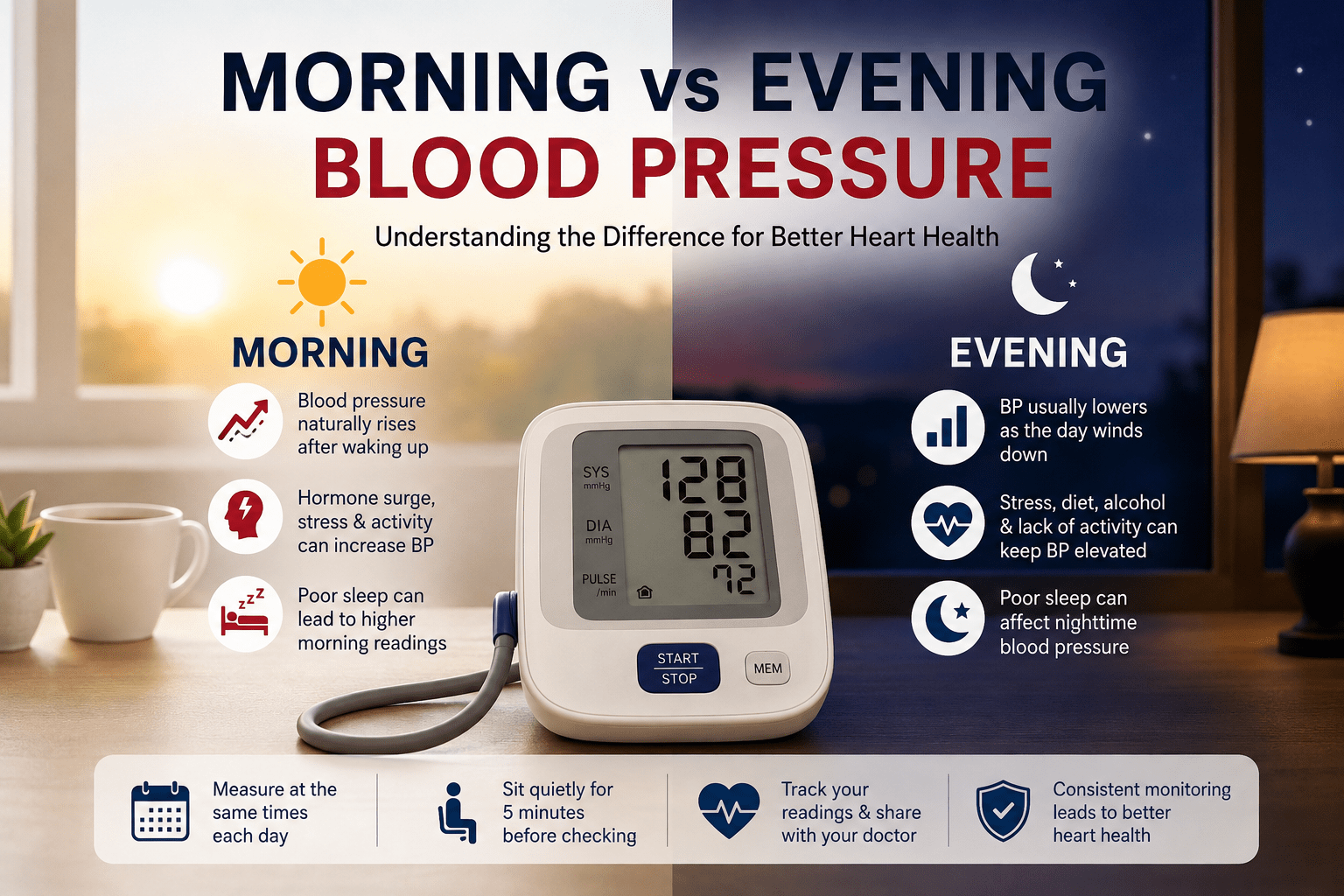

Blood pressure changes throughout the day. For many people, readings may be different in the morning compared with the evening because of changes in hormones, activity, stress, sleep, meals, medications, and other factors.
Understanding morning vs evening blood pressure can help you and your healthcare provider recognize patterns and determine whether your blood pressure is being adequately controlled throughout the day.
What Is Normal Blood Pressure?
Blood pressure is measured using two numbers:
- Systolic blood pressure: The pressure in your arteries when your heart contracts.
- Diastolic blood pressure: The pressure when your heart relaxes between beats.
A healthy blood pressure target varies depending on your age, medical history, medications, and cardiovascular risk. Your healthcare provider can help determine the appropriate range for you.
One blood pressure reading does not always provide a complete picture. Tracking readings at consistent times can reveal useful patterns.
Why Is Blood Pressure Often Higher in the Morning?
Blood pressure naturally follows a daily rhythm. It can rise in the morning as your body transitions from sleep to wakefulness.
Several factors may contribute to higher morning blood pressure, including:
1. The Morning Hormone Surge
Hormones such as cortisol and adrenaline increase around the time you wake up. These hormones help your body become alert and active but can also temporarily increase heart rate and blood pressure.
2. Poor Sleep
Interrupted sleep, insufficient sleep, or conditions such as sleep apnea may affect blood pressure regulation. People who consistently wake with elevated blood pressure may benefit from discussing their sleep quality with a healthcare professional.
3. Stress and Anxiety
Morning responsibilities, work-related stress, or anxiety can temporarily raise blood pressure.
4. Medication Timing
If you take blood pressure medication, the timing and duration of its effects may influence your morning readings. Never change the timing or dose of medication without discussing it with your healthcare provider.
Why Can Blood Pressure Be Different in the Evening?
Blood pressure may decrease later in the day as the body becomes less active and prepares for sleep. However, this is not true for everyone.
Evening blood pressure may remain elevated because of:
- Stress during the day
- Physical inactivity
- High-sodium meals
- Caffeine or other stimulants
- Alcohol consumption
- Certain medications
- Poor sleep
- Underlying health conditions
Some people may also experience an increase in blood pressure at night rather than the expected nighttime decline.
Morning vs Evening Blood Pressure: Which Is More Important?
Neither time of day is automatically more important for everyone.
The most useful approach is often to look at the overall pattern. If your blood pressure is consistently higher in the morning, consistently elevated in the evening, or remains high throughout the day, those patterns may provide valuable information for your healthcare provider.
For some individuals, healthcare professionals may recommend home blood pressure monitoring at specific times to evaluate treatment effectiveness.
How to Measure Blood Pressure Correctly at Home
For more reliable readings, follow a consistent routine.
Before measuring:
- Avoid exercise, caffeine, and smoking for about 30 minutes when possible.
- Empty your bladder.
- Sit quietly for at least five minutes.
- Keep your back supported.
- Place both feet flat on the floor.
- Rest your arm on a table so the cuff is approximately at heart level.
- Use a properly sized upper-arm blood pressure cuff.
- Avoid talking during the measurement.
Take readings at approximately the same times each day if your healthcare provider recommends home monitoring.
Keeping a blood pressure log can also help identify trends that may not be obvious from occasional measurements.
What Does a High Morning Blood Pressure Reading Mean?
An occasional elevated reading does not necessarily mean you have uncontrolled hypertension. Temporary factors such as stress, poor sleep, illness, pain, caffeine, or recent physical activity can affect the result.
However, repeatedly elevated morning readings deserve attention, particularly if they occur despite taking prescribed blood pressure medication.
Your healthcare provider may consider your complete blood pressure pattern along with your medical history and other cardiovascular risk factors.
What If Evening Blood Pressure Is Higher?
Consistently elevated evening blood pressure may also warrant evaluation.
Your provider may review factors such as:
- Medication schedule
- Sodium intake
- Physical activity
- Stress levels
- Sleep habits
- Weight changes
- Other medications or supplements
- Kidney and cardiovascular health
Rather than focusing on one isolated reading, it is generally more helpful to evaluate several readings collected under similar conditions.
When Should You Seek Medical Attention?
Very high blood pressure accompanied by symptoms such as chest pain, shortness of breath, severe headache, weakness, confusion, vision changes, or other concerning symptoms requires prompt medical attention.
If you repeatedly receive unusually high readings, contact your healthcare provider for guidance rather than attempting to adjust your medication on your own.
The Importance of Personalized Heart Care
Blood pressure is only one part of cardiovascular health. A comprehensive evaluation may consider cholesterol, blood sugar, family history, lifestyle factors, sleep, medications, heart health, and other individual risk factors.
If your blood pressure seems consistently higher in the morning or evening, keeping a detailed home monitoring record can give your cardiologist useful information about your daily blood pressure pattern.
Frequently Asked Questions
Is blood pressure normally higher in the morning?
Blood pressure can naturally rise around waking because of normal hormonal and nervous-system changes. However, consistently elevated morning readings should be discussed with a healthcare professional.
Should I check my blood pressure in the morning or evening?
Depending on your situation, your healthcare provider may recommend checking it at one or both times. Consistency is important when monitoring blood pressure trends.
Why is my blood pressure normal at night but high in the morning?
Morning hormonal changes, poor sleep, stress, medication timing, and other factors can contribute to this pattern. A series of readings can help your provider determine whether further evaluation is needed.
Can stress cause higher evening blood pressure?
Yes. Stress, physical activity, caffeine, meals, and other daily factors can temporarily affect evening blood pressure.
Should I change my blood pressure medication if my morning readings are high?
No. Medication dose or timing should only be changed after discussing your readings with your healthcare provider.